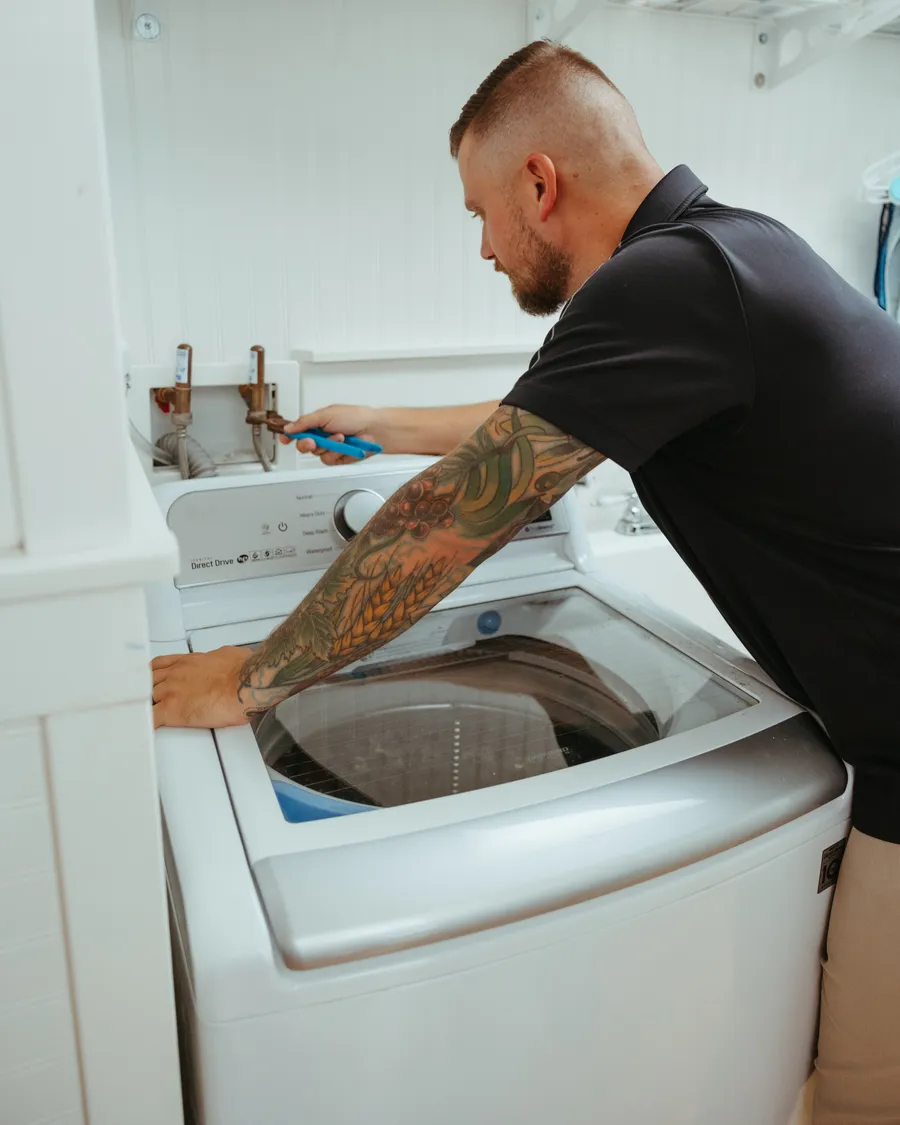

A repipe replaces the water supply lines in your house, either all of them or just the run that keeps failing. It starts with an assessment, a plan and a permit. The house is protected, small openings are cut, and the new lines go in. Then come a pressure test and a city inspection, and finally the walls are patched. How long each stage takes depends on the size of the home, how many fixtures it has, and how easy the walls and attic are to reach. Here’s what happens at each step, and what to ask along the way.
Step 1: The assessment, and whole or partial
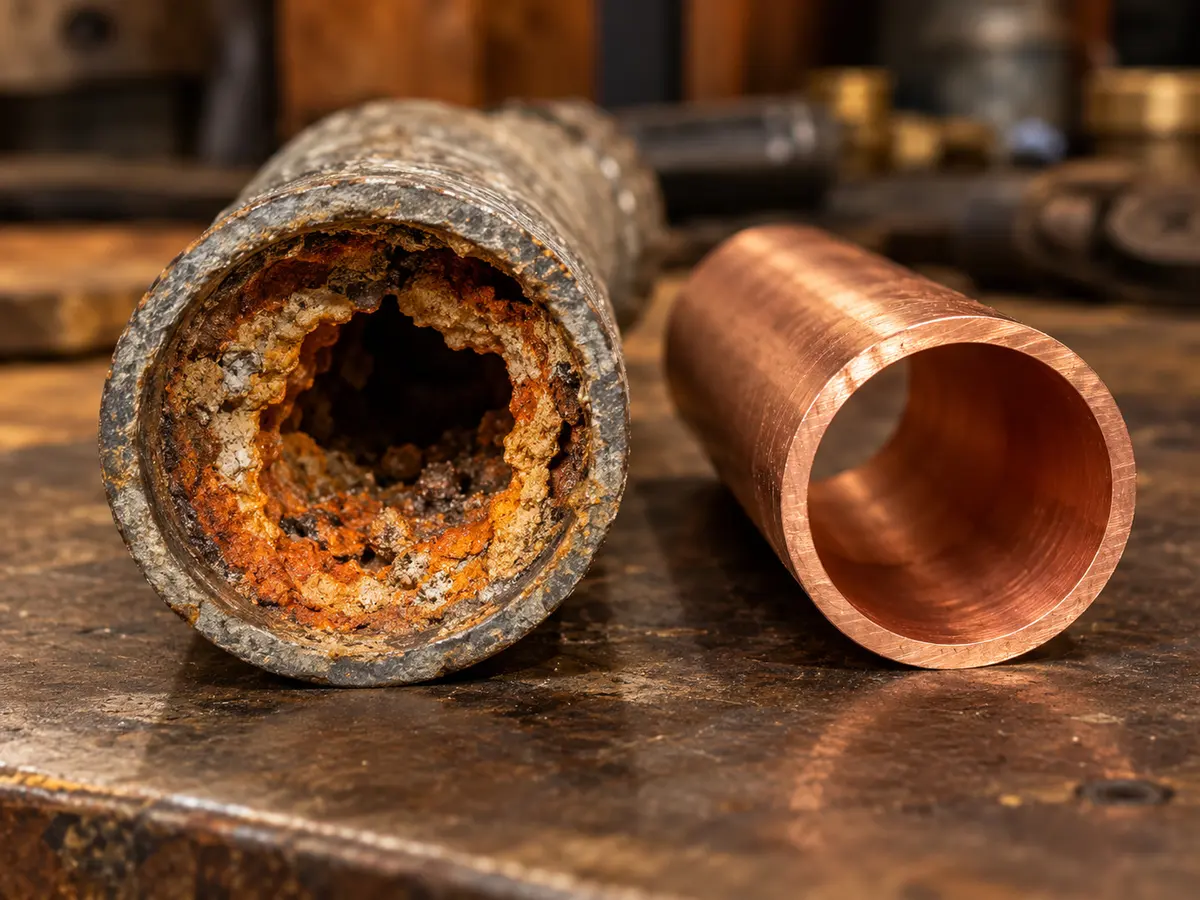
First, find out what’s in your walls. There are four kinds of supply pipe you’re likely to find. Galvanized steel was common before the 1960s. Polybutylene went in from the late 1970s to the mid-1990s. Copper has been the standard for most of the last sixty years, and PEX has been common since the 2000s.
Age tells you where to look. In Rossmoor, Ross Cortese began building in 1956, and most of the 3,430 single-family homes went up between then and the early 1960s. Houses of that era may have galvanized or early copper lines. In Orange’s Old Towne, many homes were built before 1920, and the plumbing has often been redone in pieces over a century.
From there, the choice is full or partial. A full repipe replaces every water supply line in the house at once. A partial repipe replaces only the run that’s failing: one line, one area, or a rerouted section. It can also be where a larger repipe starts later.
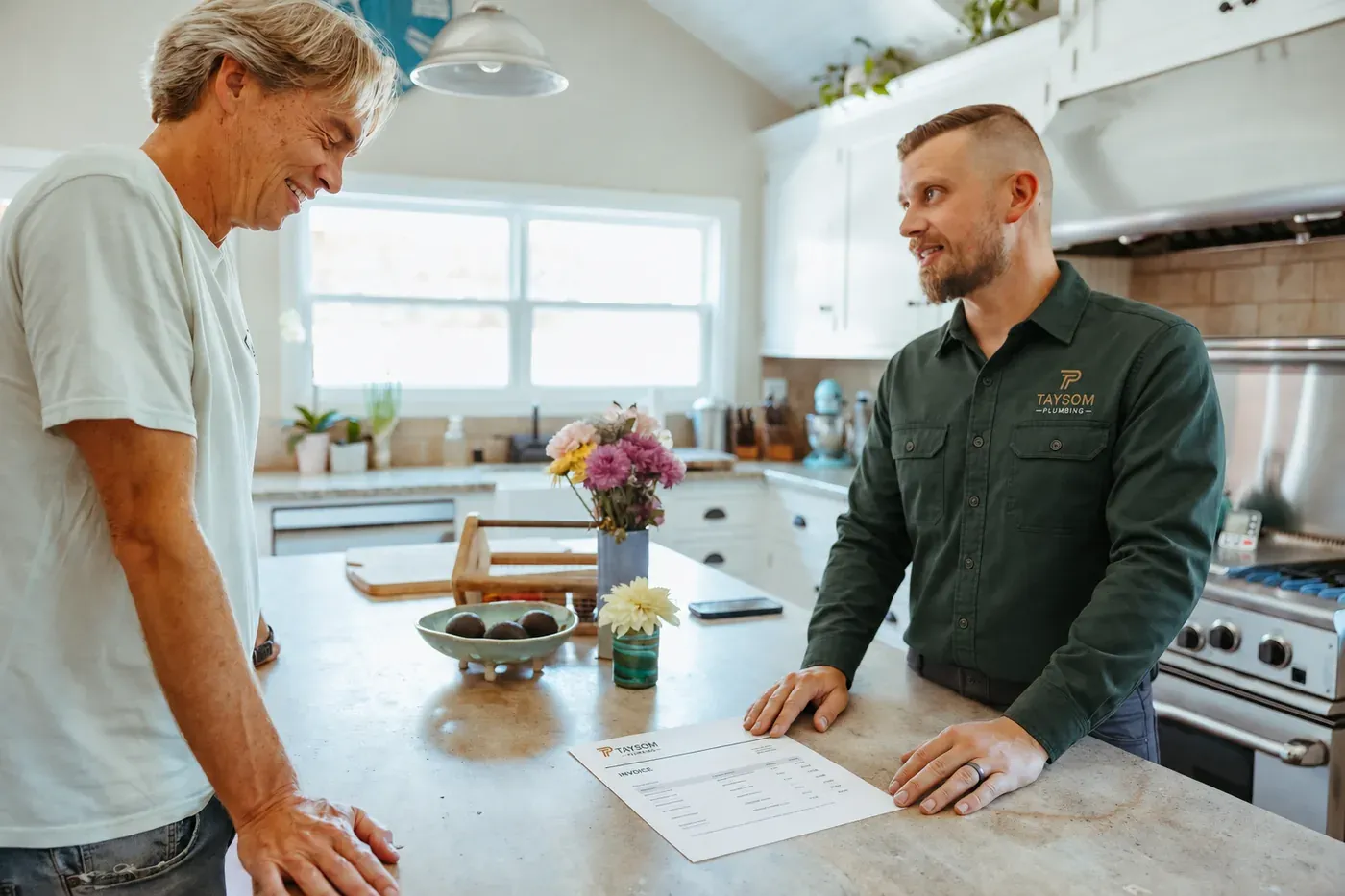
At Taysom Plumbing, this is where we explain what we found and give you your options, each with a price. Nothing starts until you’ve agreed to it.
Step 2: Choosing PEX or copper
PEX is flexible plastic tubing. Wikipedia’s article on it notes:
- It bends without buckling, so it needs fewer fittings and turns, which means less pressure loss.
- It joins without soldering, so there’s no open flame inside your walls.
- Unlike copper, it doesn’t corrode when exposed to minerals or moisture.
- It can’t be used where it’s exposed to sunlight. Even 30 days of direct sun may make it brittle.
- Some yellow-brass fittings used with it corroded and leaked in Nevada, and red brass replaced them.
California formally added PEX to its plumbing code on August 1, 2009.
Copper is the long-standing choice. Wikipedia notes:
- Soldered joints form a very strong bond that can last for decades.
- Copper has a high level of corrosion resistance. Type L is a common wall thickness for home water lines.
- It can develop pinhole leaks from stray electrical current when a home’s grounding or bonding isn’t right.
- Very fast or turbulent flow can wear it from the inside.
Which suits your home depends on the house, the route the lines can take, and your priorities. It’s a decision worth talking through, not a default.
Step 3: The permit
A repipe is permitted work. The City of Irvine has a page just for residential re-pipes. The application goes through its online permit portal and should state the number of fixtures and whether the job is PEX, copper or epoxy lining. The city says all work is subject to field inspection.
Other cities draw the same line. Yorba Linda’s list of plumbing work that doesn’t need a permit covers clearing stoppages and repairing leaks. It stops short of any work that replaces or rearranges pipes or valves.
Step 4: Protecting the house and opening walls
Before any wall is opened, floors and furniture near each work area should be covered and the path in and out kept clear. Ask how dust will be handled, too.
New lines don’t mean whole walls coming down. The openings are cut where the pipe has to reach: behind each fixture, and at points along the route.
In an older home, the route deserves extra thought. In Orange’s Old Towne, it’s worth planning the pipe route to spare original plaster and trim. Ask to see where the openings will be before anything is cut.
Step 5: Running the new lines and switching over
The new lines are run to each fixture. Ask whether they can go in while the old pipe stays in service, so the water only goes off when each connection is made. The new lines tie in at the main, the water heater, and every sink, toilet, tub, shower and outdoor faucet.
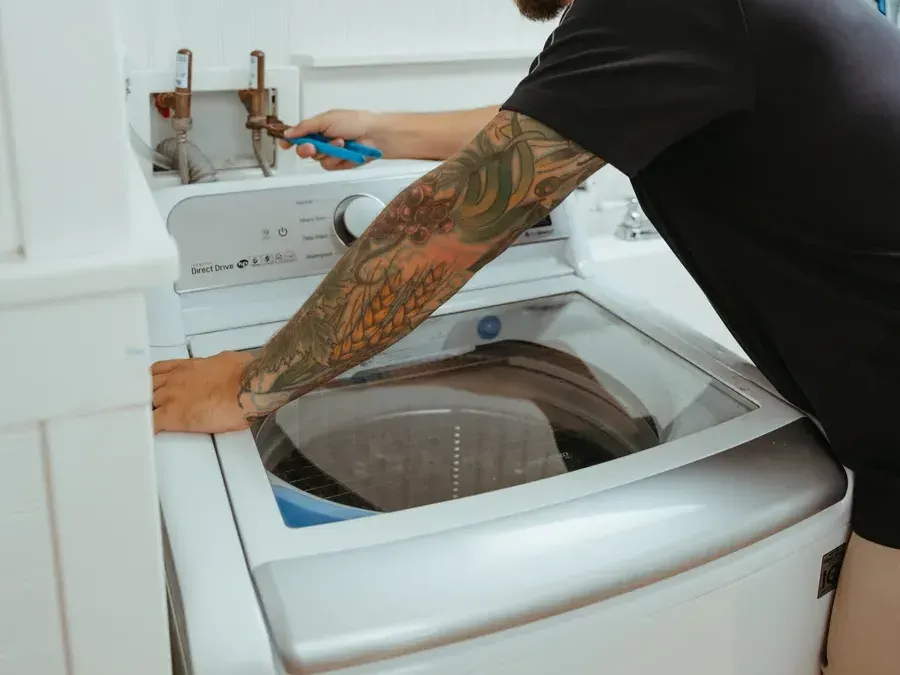
How long the water is off, and how often, depends on the size of the home and the plan. A repipe should be planned around your household so you keep water where you need it. Ask to see that plan before day one.
Along the way, the work has to meet code details the inspector will check. The City of Newport Beach’s repipe checklist lists several:
- Steel nail plates where pipe runs within an inch of the edge of the framing, so a nail or screw can’t reach it later.
- Hot water piping insulated.
- A backflow preventer on each hose bib.
- Bonding reconnected on metal piping.
- A pressure regulator where pressure is above 80 psi.
- The water heater braced to the state standard.
Step 6: Pressure test, inspection and patching
Once every line is in, the system is tested before the walls close. Under the California Plumbing Code, as Newport Beach’s checklist puts it, the water supply system is tested at its working pressure. It has to hold without leaking for at least fifteen minutes.
Then the city inspector visits. Leave the openings until it passes: items like nail plates and pipe supports can only be checked while the pipe is visible. Newport Beach’s checklist also notes that permitted alterations over a set value need smoke alarms and carbon monoxide detectors in place, so check yours beforehand.
After that, the openings are patched. Agree up front on what “patched” will mean in your house.
Questions people ask
Does a repipe include the drains and sewer line?
No. A repipe replaces the water supply lines that bring clean water to each fixture. Drain and sewer lines are a separate job.
Is PEX allowed in California?
Yes. It was formally added to the California Plumbing Code in 2009, and Irvine’s re-pipe application lists PEX alongside copper.
Can a repipe be done in stages?
Yes. A partial repipe replaces just the run that’s failing, and it can be the first stage of a larger one later.
Taysom Plumbing does full and partial repipes across Orange County, planned around your household so you keep water where you need it. We explain what we found, give you the options with a price for each, and nothing starts until you’ve agreed to it. We’re licensed in California, we respect your home, and we clean up after ourselves. We answer the phone 24/7. See more about repiping. Request a visit online or call (949) 919-7103.
Sources (5)
Want us to take a look?
We answer the phone 24/7. Tell us what’s going on and we’ll give you a price before we start.