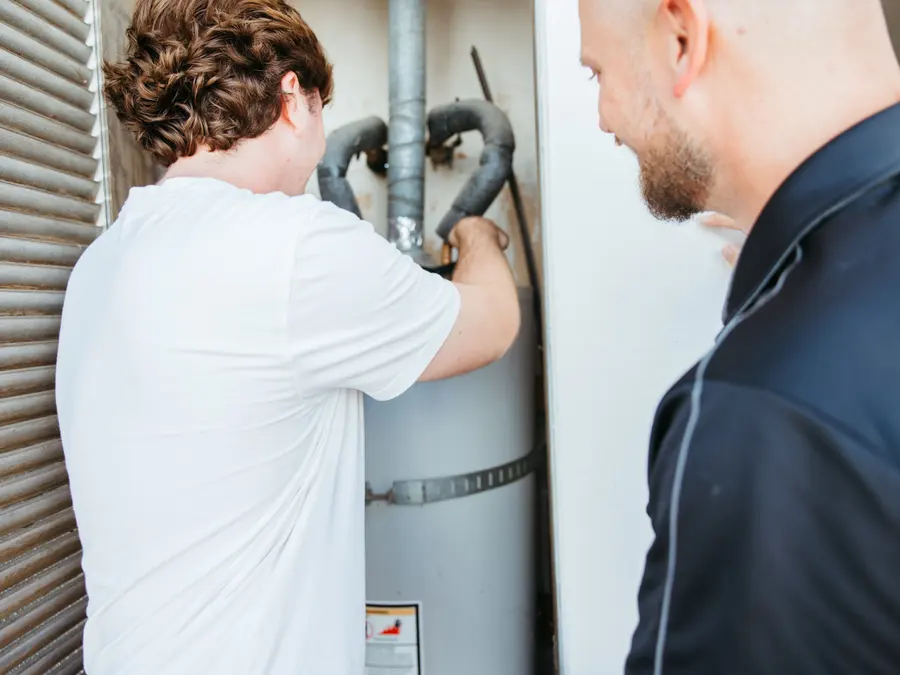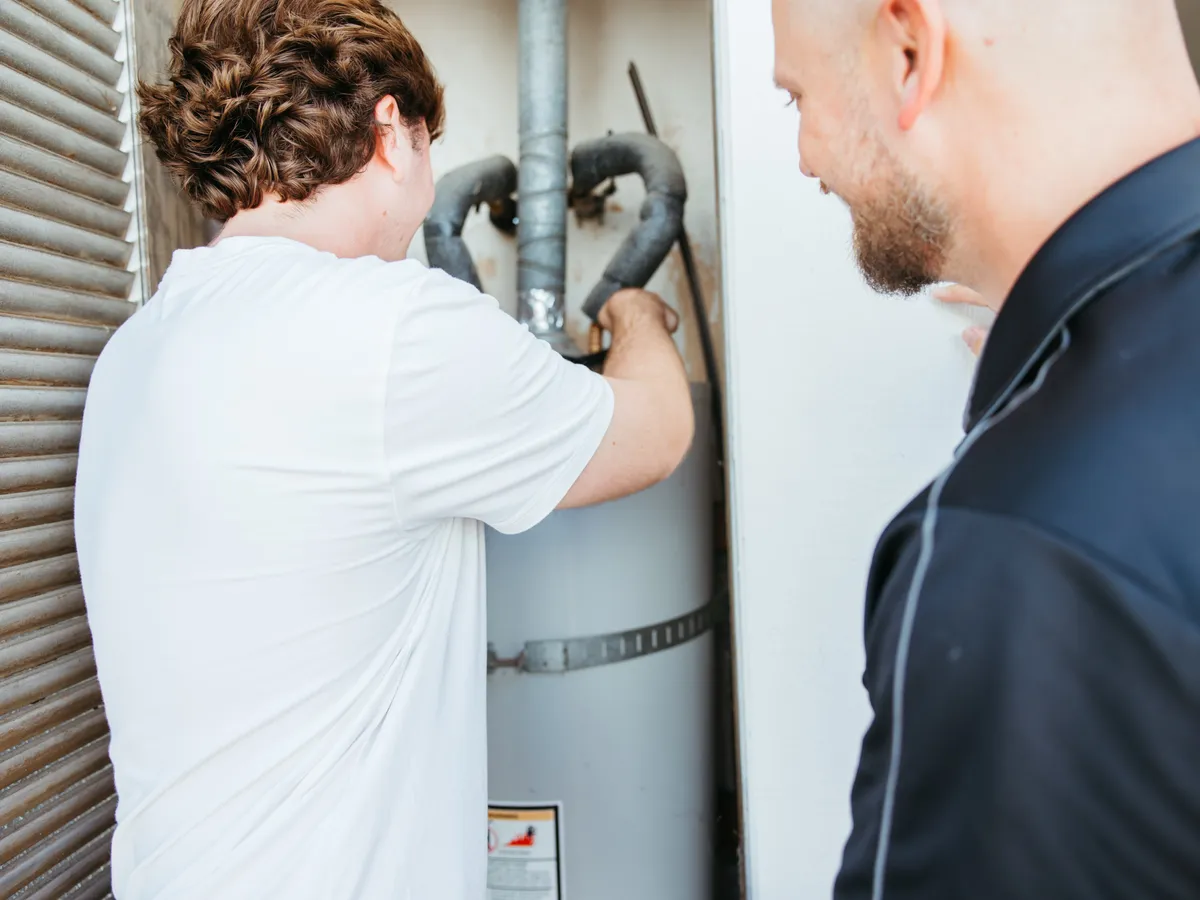
Before a full house arrives, check four things. Can your water heater keep up with showers back to back? Do the guest toilets and drains run freely? Do you know where your main shutoff and water heater shutoff are? And is anything dripping, inside or out? Doing it a few days early leaves time to fix what you find. There’s a checklist at the end.
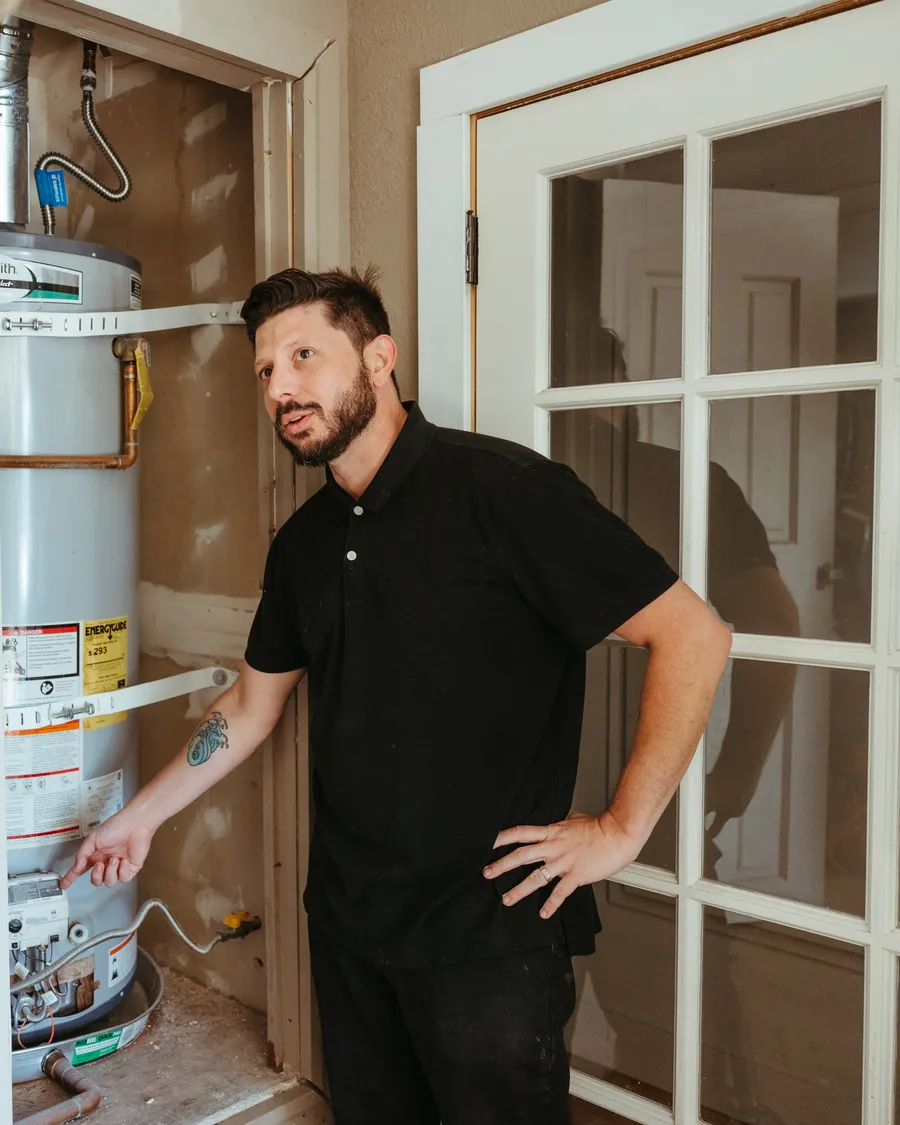
Hot water: how much your heater really holds
A tank heater keeps a set amount of water hot, then reheats as you use it, so tank size isn’t the whole story. ENERGY STAR rates storage heaters by their first-hour rating. That’s an estimate of the most hot water, in gallons, a heater can supply in an hour that starts with a full, hot tank.
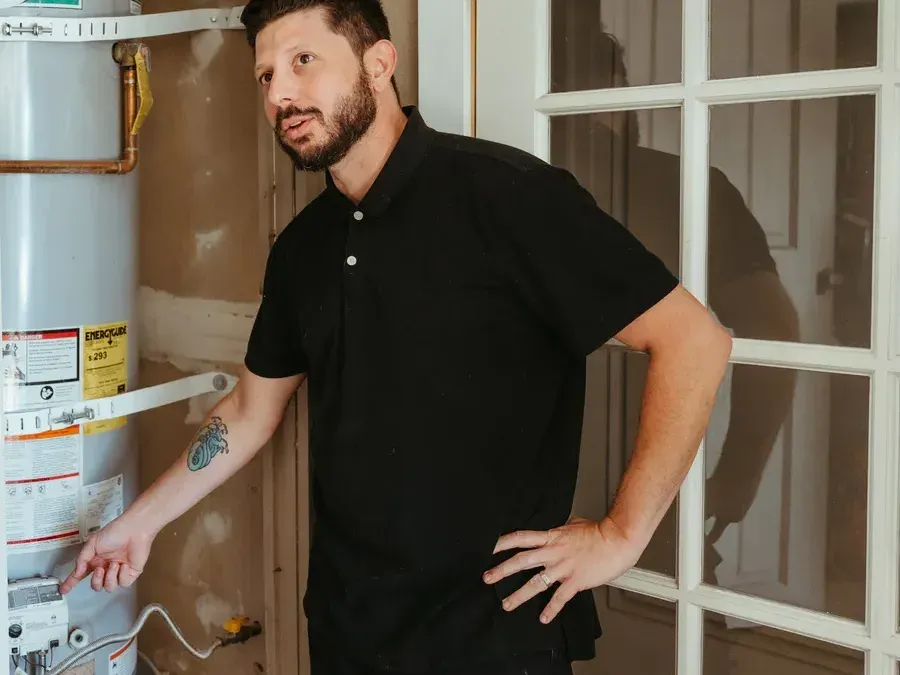
When several people shower one after another, they can use hot water faster than the heater can make more. Tankless heaters work differently. They’re rated in gallons per minute, so the limit is how many hot taps run at once, not how many showers in a row.
A few ways to stretch what you have:
- Space the showers out. Leave a gap between them so a tank can recover.
- Move the big users. Run the dishwasher and the washing machine outside the morning shower rush.
- Mind the flow. EPA WaterSense says standard showerheads use 2.5 gallons a minute; WaterSense-labeled ones use no more than 2.0.
If showers have been going cold sooner than they used to, it’s often sediment building up in the tank, and hard water adds to it. Much of Orange County’s water is very hard. Tustin’s water measured 22 grains per gallon in Tustin Water Services’ 2025 figures, among the hardest in the county. Garden Grove’s 2025 report put it at 17.7. A tank that rumbles or pops as it heats is often full of scale, and a flush may help.
In a condo or upstairs unit, like many in Los Alamitos, the heater needs a drain pan and a working shutoff, since a failure reaches the floor below. You can read more about water heater repair and replacement.
Guest bathrooms: toilets, wipes and a plunger
OC San, the Orange County Sanitation District, puts it simply: the toilet is meant only for the three P’s, which are pee, poop and toilet paper. Baby wipes, paper towels, diapers, sanitary products and facial tissue don’t break down. They form rag clogs in pipes and in the sewer district’s own equipment.
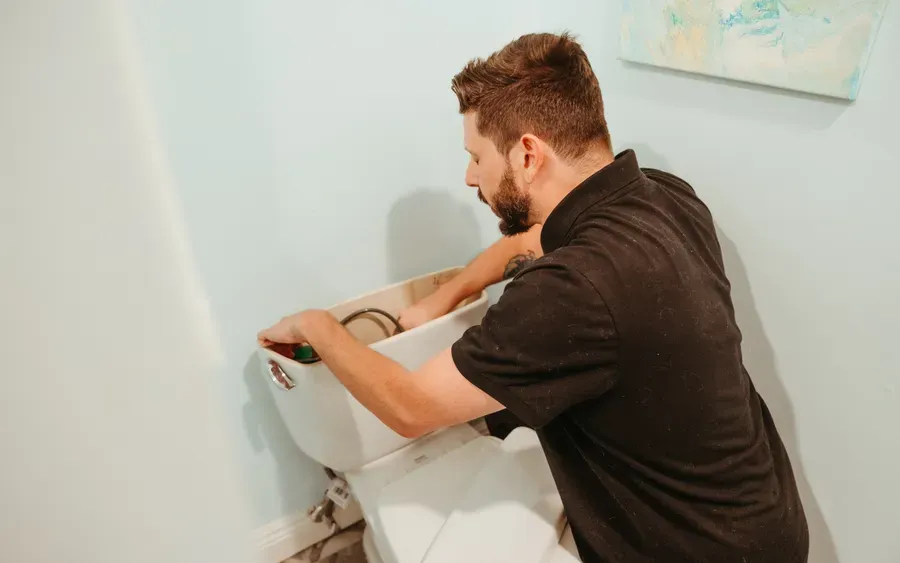
The Irvine Ranch Water District adds that “flushable” wipes are not flushable: they’re made of plastic that can’t decompose or break apart.
Make the right thing easy:
- Put a small trash can with a lid in every bathroom guests will use.
- Keep a plunger in each bathroom, not one in the garage.
- Test any toilet that runs on its own. EPA WaterSense suggests a few drops of food coloring in the tank. If color shows in the bowl within 10 minutes, the flapper is leaking.
If a toilet clogs, use the plunger rather than flushing again. If the tub gurgles or fills when you flush, the clog is past the toilet.
Know where your shutoffs are
If a pipe bursts or a supply line lets go, the first job is stopping the water.
SCV Water, a Southern California water agency, says a house shutoff valve is usually outside the house, often just below the hose bib where the main line comes in. It will be one of two types:
- A gate valve has a round or oval handle. It takes several turns clockwise to close fully.
- A ball valve has a straight lever. A quarter turn closes it.
Find yours now and try it. SCV Water warns that old valves can be stuck, keep spinning, or even break off in your hand. Show at least one other adult where it is.
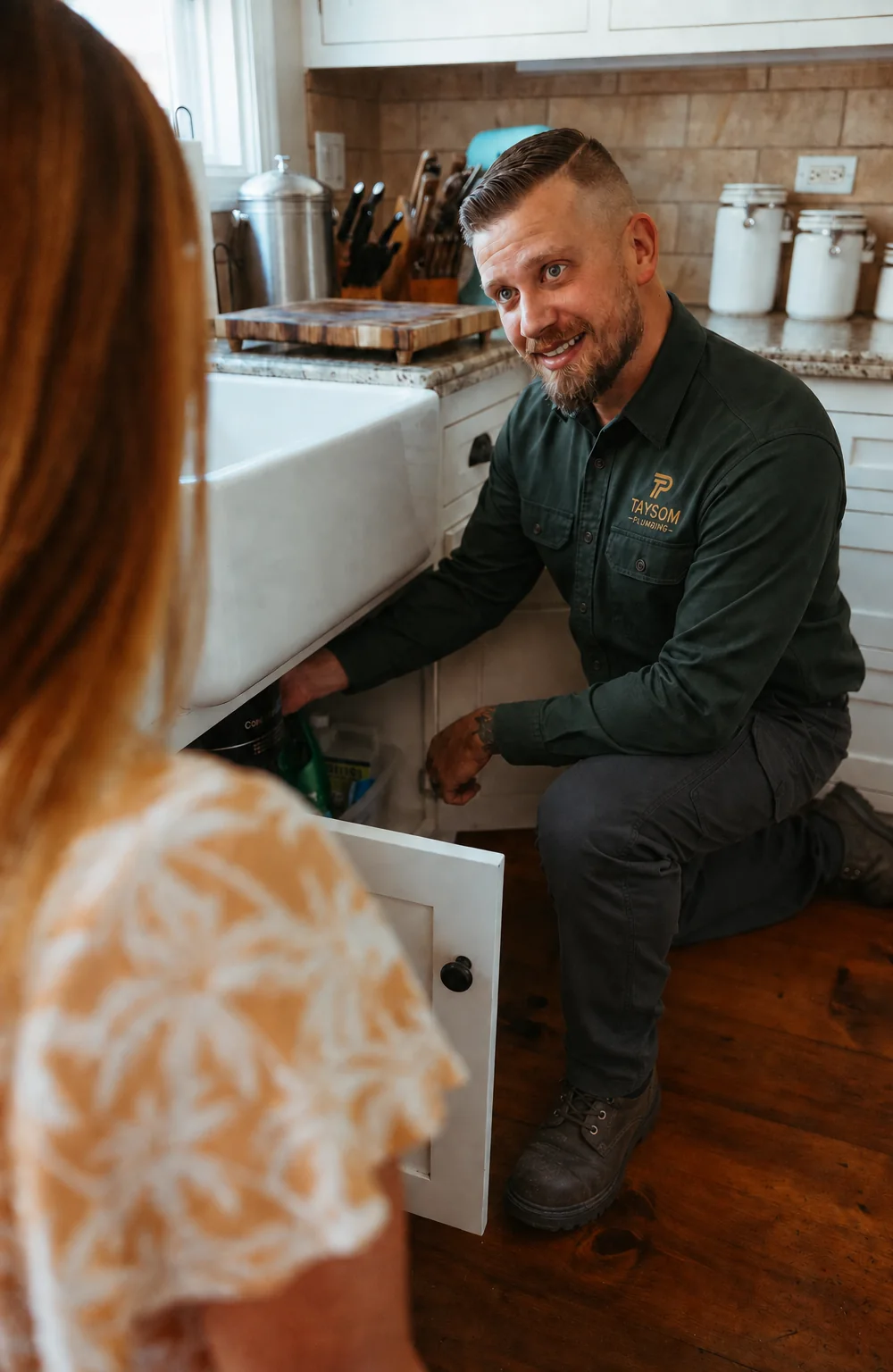
Smaller valves under sinks, behind toilets, at the washer and at the water heater each shut off just that fixture. Learn the one on your water heater’s supply line, so a leaking tank can be isolated on its own.
Slow drains: fix them now, not on the day
A drain that’s slower than it used to be is usually buildup narrowing the pipe, well before it blocks completely.
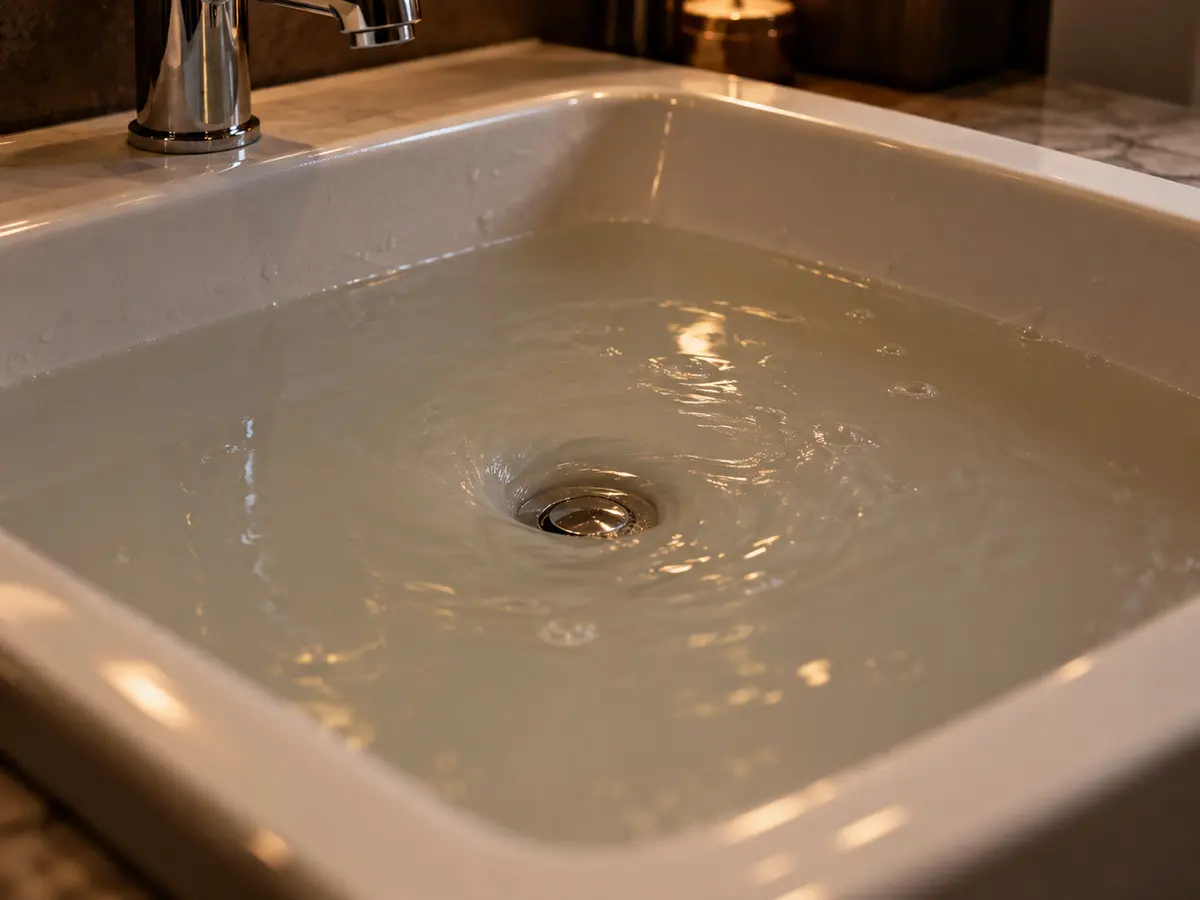
Run each sink, tub and shower this week and watch it drain. Gurgling after it drains, or several drains slow at once, usually points to the main line rather than one fixture. In Garden Grove’s 1950s houses, the line to the street may still be the original cast iron or clay. In Tustin’s 1960s homes, original drain lines are now around sixty years old.
For the kitchen, see what not to put down the sink or disposal, and for anything slow now, drain cleaning and repairs.
Outside: hose bibs and hidden drips
Turn on each outdoor faucet. EPA WaterSense suggests checking the hose connection while the water runs. If it leaks there, replace the hose washer and tighten the connection.
Small drips add up. EPA WaterSense says a faucet dripping once a second wastes more than 3,000 gallons a year.
Suspect a leak you can’t see? Try the meter test. Turn off every tap, toilet, sprinkler and appliance, then watch the leak indicator on your water meter for fifteen minutes. If it moves, water is going somewhere. That’s where leak detection comes in.
The checklist
- Showers going cold early? Have the water heater looked at now.
- Space showers out, and run the dishwasher outside the rush.
- A lidded trash can and a plunger in every guest bathroom.
- Food-coloring test on any toilet that runs.
- Find and try the house shutoff and the water heater shutoff.
- Run every drain and note any that are slow or gurgle.
- Turn on each outdoor faucet and check the hose connection.
- Do the meter test if the water bill has crept up.
Questions people ask
How many showers can my water heater handle in a row?
It depends on the heater’s first-hour rating, not just its tank size, and on how long everyone showers. Spacing showers out gives a tank time to reheat.
Is it OK to flush wipes if the package says “flushable”?
No. OC San lists wipes among things that don’t break down, and IRWD says “flushable” wipes are not flushable. Put a lidded bin in the bathroom instead.
If your water heater is falling behind, Taysom Plumbing will look at it and explain what we found. We’ll tell you honestly which option your home actually needs: a repair, a tank or tankless. If a drain is slow or something is dripping, we’ll find out why. You get your options with a price for each, and nothing starts until you’ve agreed to it. We’re licensed in California, and we clean up after ourselves. Request a visit online or call (949) 919-7103.
Sources (6)
Want us to take a look?
We answer the phone 24/7. Tell us what’s going on and we’ll give you a price before we start.