A tank water heater costs less to buy and can run several showers and appliances at once until the stored hot water runs low. A tankless heater costs more up front but wastes less energy, takes up less space and, by the U.S. Department of Energy’s figures, lasts about 20 years against 10 to 15 for a tank. The right one depends on how much hot water you use at once and where the heater goes. It also depends on whether your gas line and venting can support a tankless unit. In Orange County’s hard water, either one needs regular flushing.
How each one works
A storage tank heater keeps a reservoir of water hot. When you open a hot tap, hot water leaves from the top of the tank and cold water refills the bottom. Gas tanks use a burner under the tank; electric tanks use heating elements.
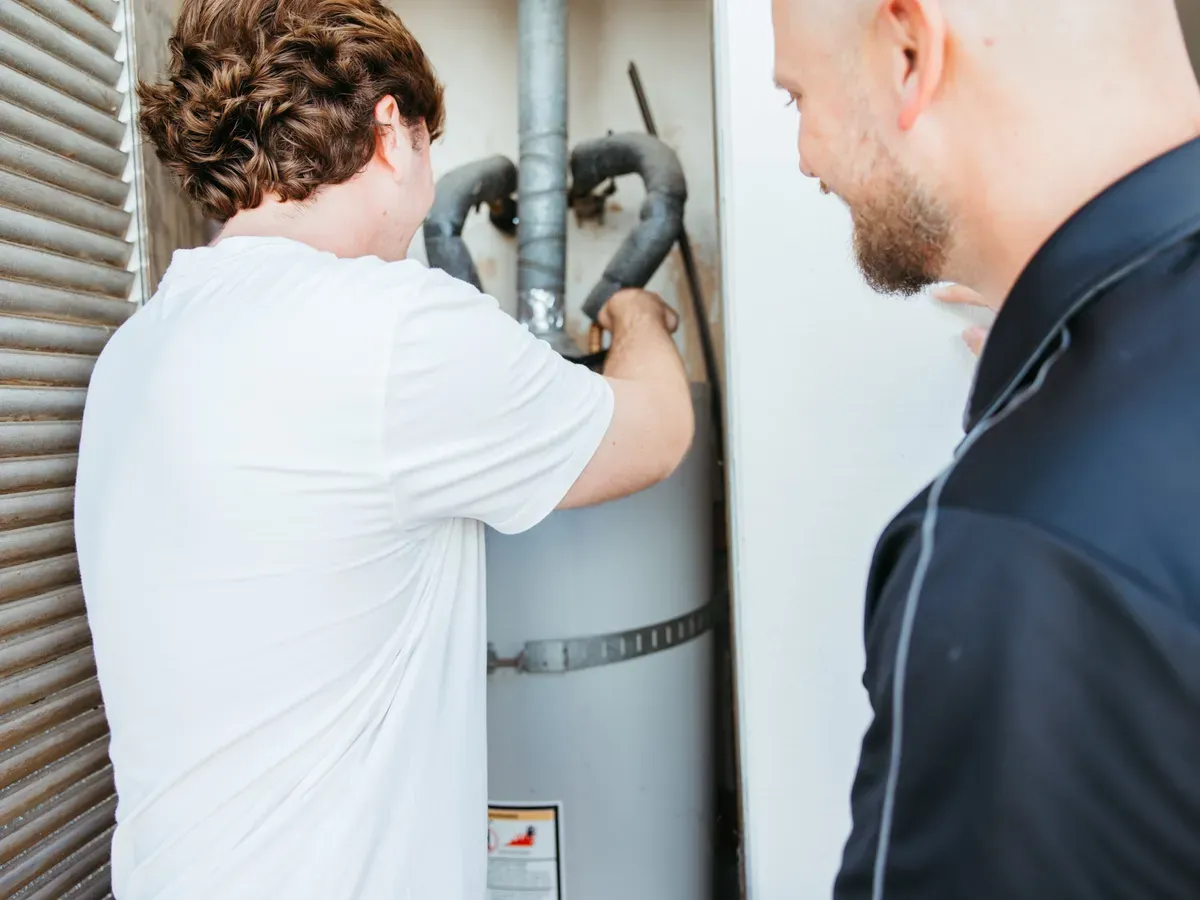
A tankless heater, also called on-demand, has no reservoir. When a hot tap opens, water flows through a heat exchanger and a gas burner or electric element heats it on the way through.
That one difference drives almost every trade-off below.
Upfront cost against running cost
The Department of Energy’s Energy Saver guide lists a lower purchase cost as a strength of tank heaters. Their weakness is standby heat loss: the tank keeps losing heat, and the heater keeps using energy to replace it, even when no tap is running.
Tankless heaters avoid standby loss. The same DOE guide puts them at 8% to 34% more efficient than storage heaters, with lower operating costs, but lists a higher initial cost as their main drawback.
The savings depend on your household. The more hot water you use, and the more hours a tank sits keeping water hot that nobody uses, the more the comparison shifts. We won’t put a number on it here, because it depends on your home, your fuel and how you use water.
Flow rate and showers at the same time
This is where households notice the difference.
A tank can supply several fixtures at once. Two showers and the dishwasher can all draw from it together. The limit is volume: run long enough and the stored hot water runs out, and the tank needs time to recover.
A tankless heater has the opposite limit. It never runs out, but it can only heat so much water at a time. DOE puts typical output at about 2 to 5 gallons per minute, and says more than one heater may be needed where hot water demand is high. Two showers plus a washing machine can ask for more than one unit can deliver, and the water at the tap cools.
Big homes feel this most. In Coto de Caza, where building shifted from 1996 toward more luxurious homes at lower densities, a long run to the farthest bathroom is a separate issue from capacity. It sometimes calls for a second heater or a recirculation pump, whichever type you choose.
Space, gas line and venting
A tankless unit is compact and hangs on a wall, which frees up the floor of a garage or closet. A tank needs its own footprint.
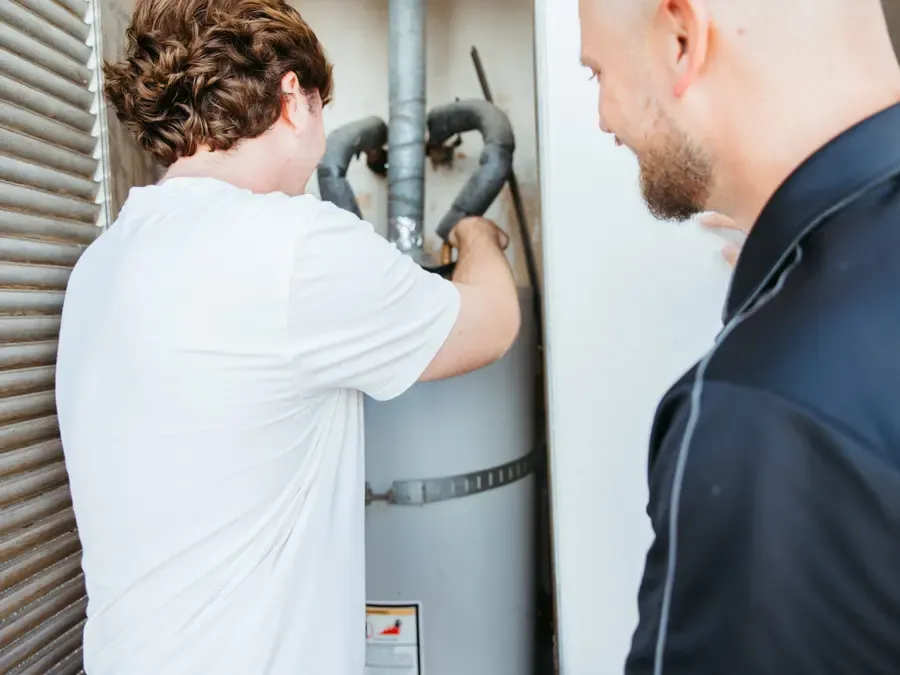
Switching from a tank to tankless is usually more than a swap, though. A tankless unit has to heat water as fast as it flows. The installer may need to increase the size of the gas line to handle the load, and replace the existing vent pipe. Gas tankless units also need electrical power for their electronics, sensors and ignition. Electric tankless models can need heavier wiring.
None of that rules tankless out. It does mean the gas line, vent route and electrical supply should be checked before you decide, not after.
Hard water: both types need flushing
Heated hard water forms scale, a crust of calcium and magnesium minerals. Orange County’s water is hard almost everywhere, and very hard in places. Tustin measured 22 grains per gallon in its 2025 report, and Yorba Linda Water District measured 20.1.
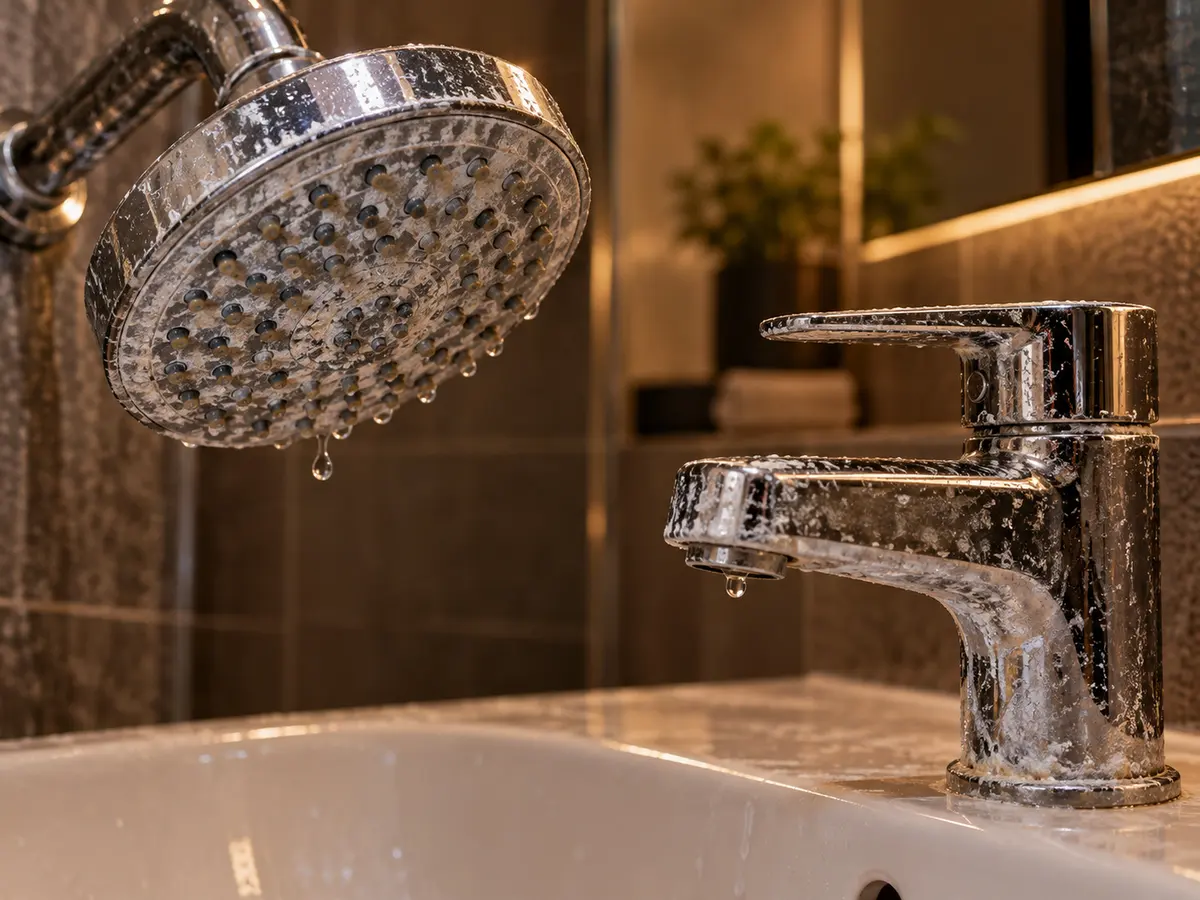
The scale shows up differently in each type:
- In a tank, it settles and hardens on the bottom. That’s what makes some tanks knock and pop as they heat, and it makes the heater work harder.
- In a tankless unit, the heat exchanger has many small passages. Scale can block them, reducing efficiency and eventually shutting the unit down from overheating. For that reason, most manufacturers call for water treatment and yearly descaling.
Noritz, one tankless maker, says flushing or descaling is part of a unit’s regular maintenance. Owners with hard water and no softener need to descale periodically, following the manual. A softener in front of either type cuts scale at the source.
Lifespan
The Department of Energy puts a conventional storage heater at 10 to 15 years and a tankless heater at about 20. The DOE page these figures come from, “Which Water Heater Is Right for You?”, is no longer on energy.gov. We link an archived copy.
Those are typical figures, not promises. Scale shortens the life of both kinds, so in hard water, flushing on schedule matters as much as which type you buy.
Which suits your home?
A tank tends to suit you if:
- Several people often use hot water at the same time.
- You want the lower purchase cost, or the existing gas line and vent are sized for a tank.
- You have floor space in a garage or closet.
A tankless heater tends to suit you if:
- You want lower running costs and a longer typical life.
- Your hot water use is spread out, or you’re willing to add a second unit for peak demand.
- Space is tight, and the gas line, venting and power can be brought up to what the unit needs.
Questions people ask
Does a tankless heater give endless hot water?
At its rated flow, yes, because it heats water as it passes through. Ask for more flow than it’s rated for and the temperature drops.
Can a tankless unit go where my old tank was?
Often, but the gas line, vent and electrical supply usually need checking first, and sometimes changing.
How often should I flush a water heater in hard water?
Follow the manufacturer’s manual for your model. With water above 10.5 grains per gallon, which is most of Orange County, plan on regular flushing rather than waiting for symptoms.
How Taysom Plumbing can help
Taysom Plumbing repairs and replaces gas, electric and tankless water heaters across Orange County. We look at how much hot water your household uses, the space you have and your gas or electric setup, then explain what we found. You get the options with a price for each, and nothing starts until you agree. We respect your home and clean up after ourselves. We’re licensed in California and we answer the phone 24/7. Request a visit online or call (949) 919-7103.
Sources (6)
- web.archive.org/web/20260617161523/https://www.energy.gov/energysaver/articles/which-water-heater-right-you
- en.wikipedia.org/wiki/Tankless_water_heating
- help.noritz.com/?p=158
- extensionpubs.unl.edu/publication/g1274/2016/html/view
- tustinca.org/DocumentCenter/View/20391
- en.wikipedia.org/wiki/Coto_de_Caza,_California
Want us to take a look?
We answer the phone 24/7. Tell us what’s going on and we’ll give you a price before we start.