A tank water heater that rumbles or pops while it heats almost always has sediment in the bottom of the tank. In Orange County that sediment is mostly the calcium and magnesium in hard water, which settle out as the water is heated. A flush often quiets it and brings back some of the hot water you’ve lost. If the noise comes with rusty hot water or water around the base, the heater may be near the end of its life.
Where the sediment comes from
Hard water carries dissolved calcium and magnesium. When it’s heated, some of those minerals come out of the water and sink to the bottom of the tank. Over months and years they build into a layer of grit and crust.
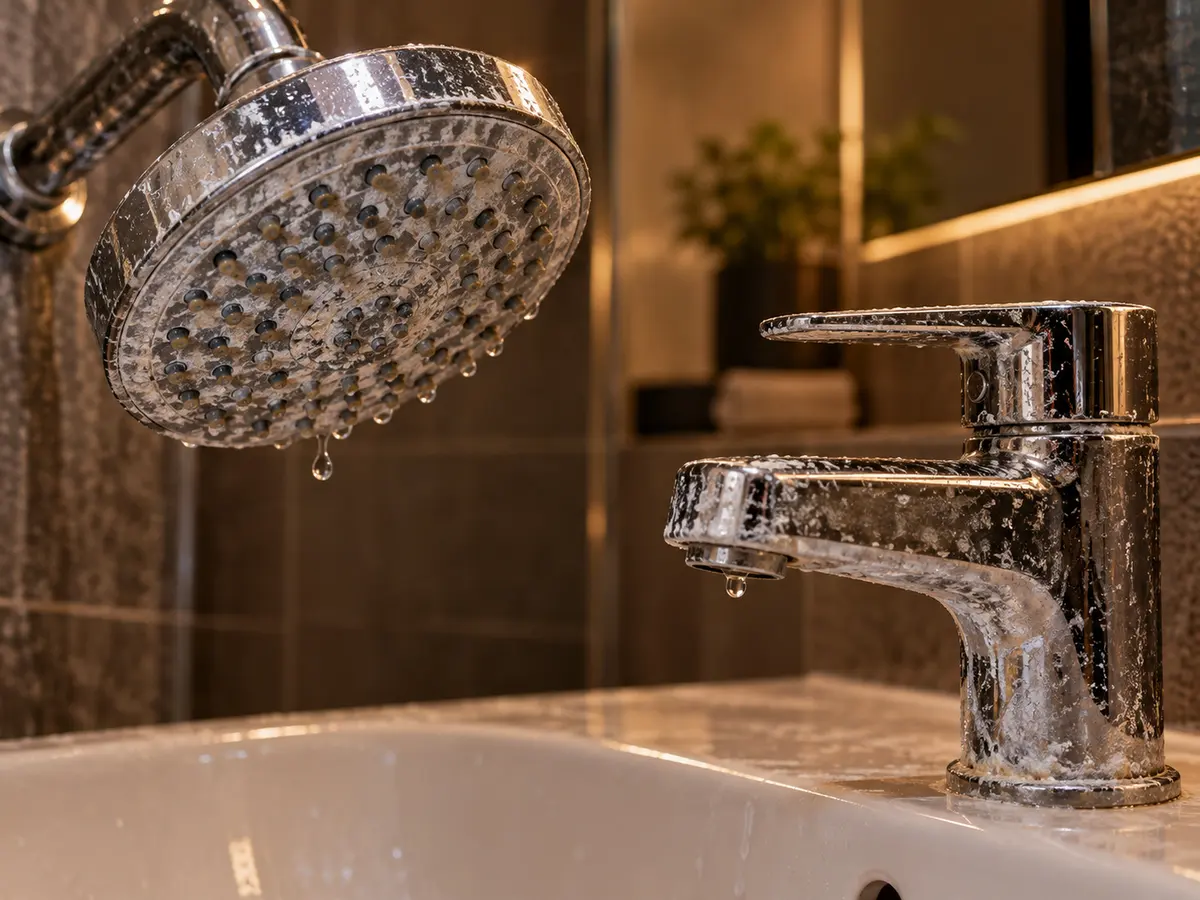
Rheem describes that layer as acting like insulation at the bottom of the tank. The burner or element has to heat through it, so it runs longer. Water trapped in and under the crust overheats in small pockets and bursts up through it. That’s the popping and rumbling you hear.
Most of Orange County’s water is hard, and some of it is very hard. Here are 2025 averages from each city’s water supplier:
| City | Supplier | Grains per gallon |
|---|---|---|
| Tustin | City of Tustin Water Services | 22 |
| Garden Grove | City of Garden Grove Water Services | 17.7 |
| Westminster | City of Westminster Water Division | 14.7 |
| Irvine | Irvine Ranch Water District | 12.5 |
| Costa Mesa | Mesa Water District | 6.6 |
On the Water Quality Association’s scale, anything over 10.5 grains per gallon counts as very hard. So a heater in Garden Grove, Westminster or Irvine collects sediment faster than one in a soft-water town. A household that uses a lot of hot water speeds it up too.
What a flush does, and how often
Flushing means draining water out of the tank through the valve near the bottom so the loose sediment goes with it. A how-to guide from Pacific Northwest National Laboratory explains why it helps: sediment can coat the heating element and keep heat from reaching the water.
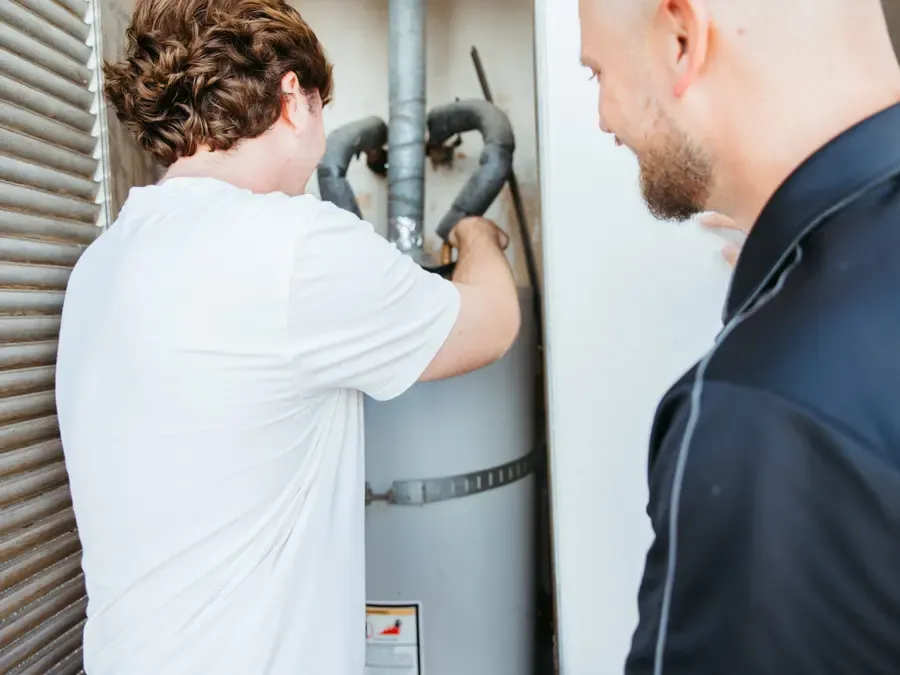
How often depends on your water. Rheem recommends a flush once a year for most homes and every six months where the water is hard. The Department of Energy’s Energy Saver guidance listed lighter routine care too. It suggested draining a quart from the tank every three months and checking the temperature and pressure relief valve every six months. It also suggested inspecting the anode rod every three to four years.
A few cautions before you try it yourself:
- Read the manual first. The laboratory’s guide says to follow the manufacturer’s steps where you have them.
- Turn off the gas or power before draining. A heater that fires while it’s empty or part empty can be damaged quickly.
- The water coming out is hot. Run the hose somewhere it can’t scald anyone.
- Know when to stop. Rheem suggests calling a professional if the drain valve won’t open or leaks, there’s heavy rust on the fittings, or the noise continues after flushing.
Rheem also warns that tanks that haven’t been flushed in years can hold hardened sediment. Disturbing it can lead to leaks. On an older tank, it’s worth having someone look before you open the valve.
When it isn’t sediment
Not every hot-water problem is grit in the tank. A few other parts are common culprits.
On an electric heater, the water is heated by elements controlled by thermostats. When an element burns out, you may get lukewarm water or a much shorter supply than before. A thermostat that’s failing can send water that swings between too hot and not hot enough.
On a gas heater, the usual suspects are the pilot, the burner and the gas control. A pilot that won’t stay lit leaves you with no hot water at all.
Running out of hot water sooner than you used to can be sediment taking up room in the tank. It can also be a failing element, or simply a household that now uses more hot water than the heater was sized for.
Rheem lists running out faster, slower recovery and rising energy bills alongside the noises. So a heater that pops and also runs short is a strong candidate for a flush.
Signs it’s near the end
Some symptoms point past maintenance and toward the tank itself:
- Rusty or brown water from the hot tap only. The inside of the tank, or the anode rod meant to protect it, may be worn out.
- Water pooling around the base. A drip from a fitting or valve on top can be fixed. Water from the tank body usually can’t.
- Rust on the jacket, the fittings or the vent.
- Age. The Department of Energy put the typical life of a conventional tank at 10 to 15 years, and tankless units at about 20. The manufacture date is usually on the rating label, or coded into the serial number.
Repair or replace?
Many parts on a tank heater can be replaced on their own: elements, thermostats, the relief valve, the drain valve, the anode rod and gas controls. On a younger heater, a part like that is often the sensible fix.
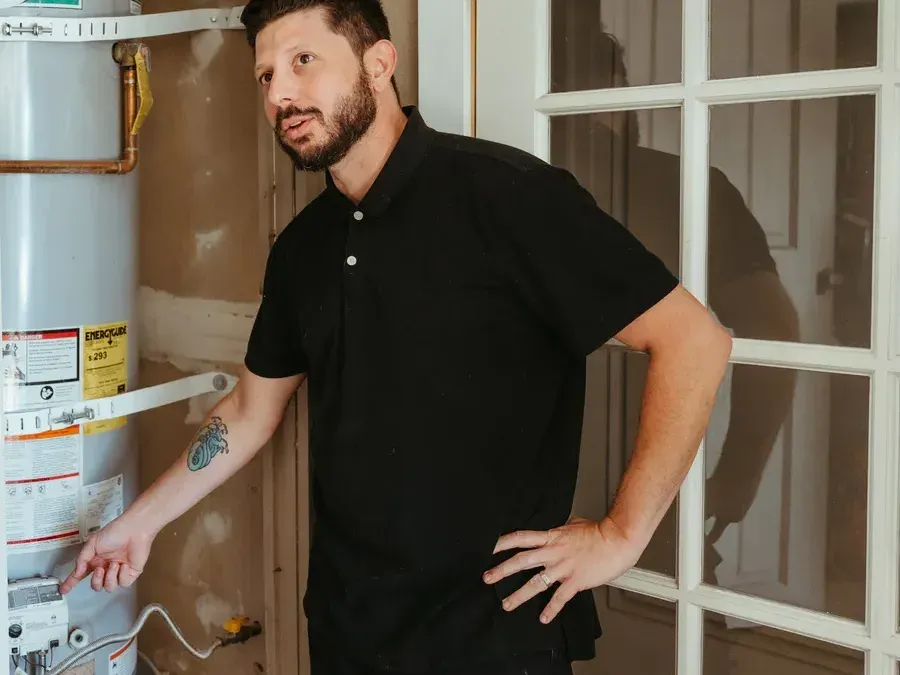
The answer changes as the heater ages. A tank near the 10-to-15-year range that’s leaking from the body, or needs a major part, is usually a candidate for replacement. Rheem suggests leaving even a flush to a professional once a unit is 8 to 12 years old or more. A replacement is also the time to weigh tank against tankless, and to check for rebates.
Questions people ask
Is a popping water heater dangerous?
Popping by itself usually means sediment, not an emergency. It does mean the heater is working harder than it should. If you smell gas, leave the house and call your gas company from outside.
Can I flush my water heater myself?
Many homeowners can, using the manufacturer’s instructions. If the heater is old, has never been flushed, or the drain valve looks rusty, have it looked at first.
Does a tankless heater need flushing too?
It needs descaling rather than a tank flush, according to Rheem. Hard water leaves scale inside the heat exchanger, which cuts the flow of hot water over time.
How Taysom Plumbing can help
Taysom Plumbing repairs and replaces water heaters across Orange County, and we’re licensed in California. We look at the heater first and tell you what we found: sediment, a failing part, or a tank at the end of its life. You get the options with a price for each, and nothing starts until you agree. We treat your home with respect and clean up after ourselves. We answer the phone 24/7. Request a visit online or call (949) 919-7103.
Sources (6)
- rheem.com/water-heating/articles/how-often-to-flush-your-water-heater-and-how-to-do-it
- basc.pnnl.gov/diy-guides/flush-water-heater-tank
- web.archive.org/web/20260101015337/https://www.energy.gov/energysaver/storage-water-heaters
- web.archive.org/web/20260101015549/https://www.energy.gov/energysaver/articles/which-water-heater-right-you
- tustinca.org/DocumentCenter/View/20391
- mesawater.org/sites/default/files/2026-06/final2026consumerconfidencereport.pdf
Want us to take a look?
We answer the phone 24/7. Tell us what’s going on and we’ll give you a price before we start.