California law requires every residential water heater to be braced, anchored or strapped so it can’t fall or shift in an earthquake. That covers new heaters, replacements and existing ones, under Health and Safety Code section 19211. The California Plumbing Code sets the minimum: straps in the upper third and the lower third of the heater, with the lower strap at least four inches above the controls. When you sell a home, you have to certify in writing that it’s been done.
What the law says
The rules sit in one short article of the Health and Safety Code, sections 19210 to 19217. The article was added in 1989, and section 19211 was last amended in 2003.
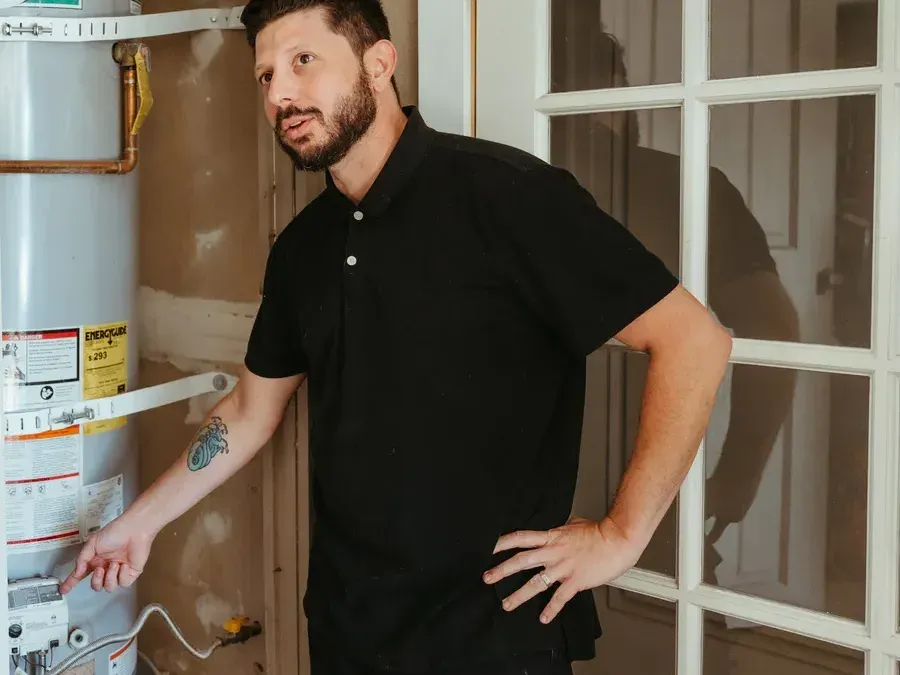
Section 19211 says four main things:
- Every residential water heater must be secured. All new and replacement water heaters, and all existing residential ones, must resist falling or sideways movement in an earthquake. At a minimum, they must be secured to the California Plumbing Code, or to a city’s or county’s local version of it.
- Sellers must certify it. The seller of a home with a water heater must certify in writing that it complies. That can go in documents already used in the sale, such as the transfer disclosure statement.
- Tenants are protected. A landlord can’t evict anyone on the grounds that eviction is needed to strap the heater.
- It covers standard heaters. The law applies to standard water heaters of up to 120 gallons for which a pre-engineered strapping kit is readily available.
A building that breaks the rule is considered a nuisance under the same section. The owner has the right to correct it.
Manufacturers have duties too. Water heaters made for sale in California on or after July 1, 1991, must say in their instructions that the heater has to be braced, anchored or strapped. The front label must carry a warning to the same effect.
Why it matters
The Legislature spelled out its reasons in section 19210. A water heater that tips over, or tears its plumbing or wiring loose in an earthquake, is a serious threat of fire, explosion or electrocution.
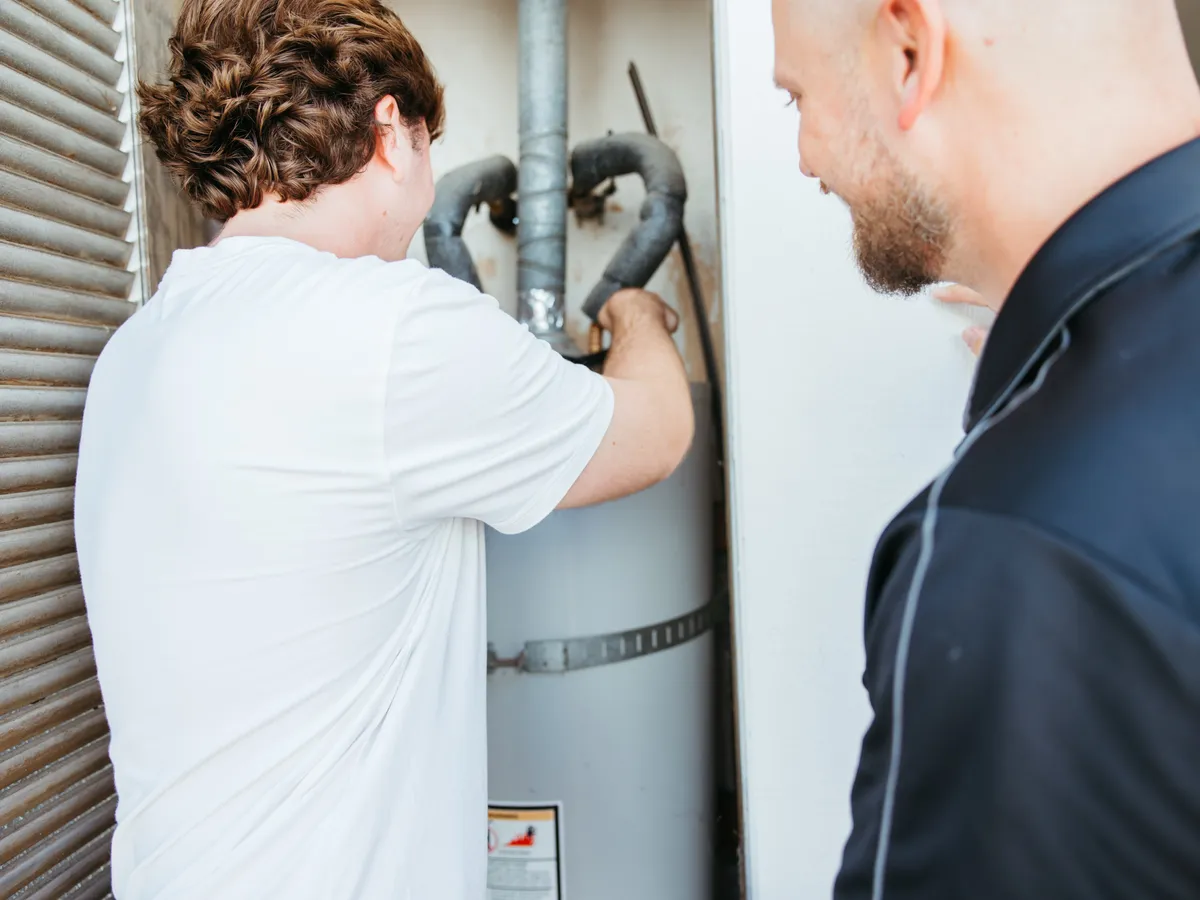
Think about what’s attached to a typical heater. A gas line feeds the burner. A vent carries exhaust out through the roof. Cold water comes in and hot water goes out through pipes at the top. A full tank is heavy, and if it rocks or walks across the floor, all of those connections take the strain. A broken gas connection beside a burner flame is exactly the fire and explosion risk the Legislature named. A broken water line can empty the tank onto the floor.
The Legislature also noted that its original goal, to have every water heater strapped by 2000, had not been met.
What the plumbing code asks for
The strapping details come from section 507.2 of the California Plumbing Code. San Bernardino County’s building department sums it up in its handout for new and replacement water heaters:
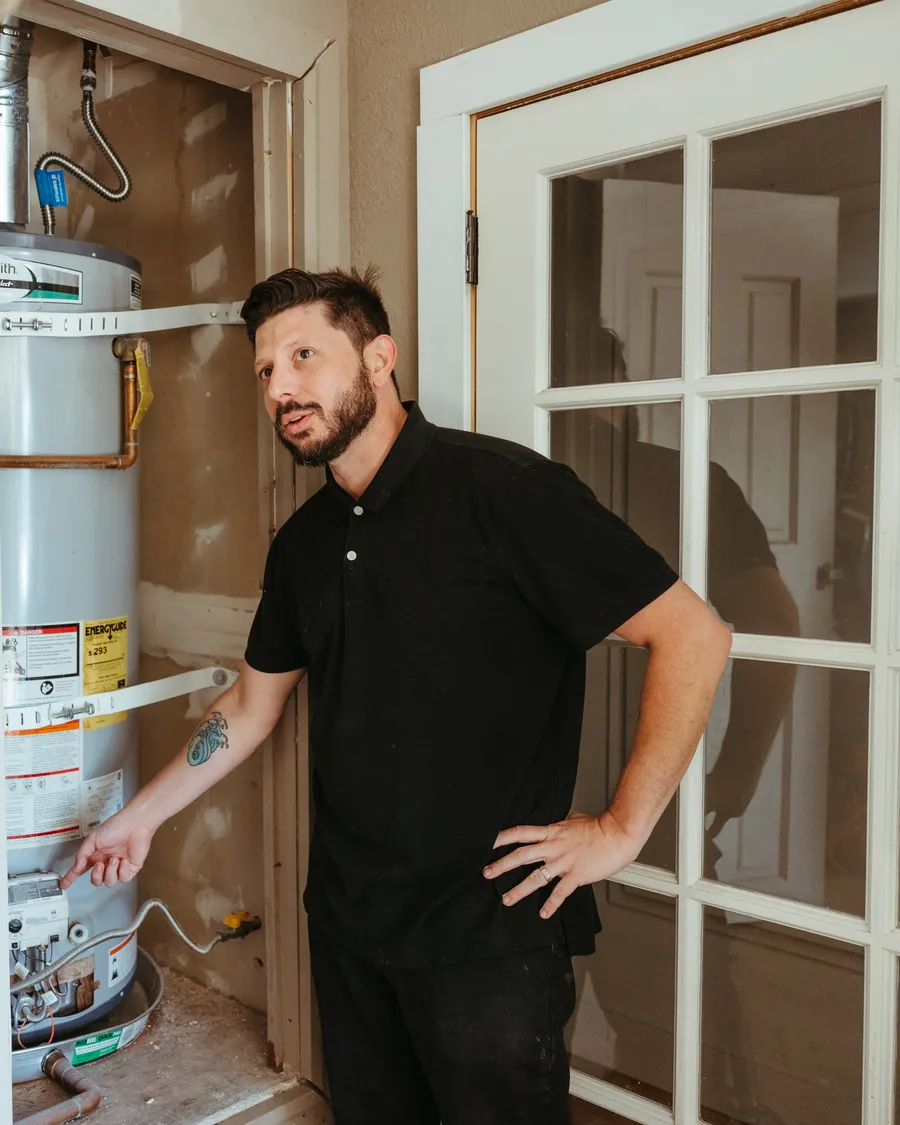
- Two points of restraint. One in the upper third of the heater’s height and one in the lower third.
- Clearance for the controls. At the lower point, keep at least four inches between the strap and the controls.
- Other methods may be acceptable. Check with your local building department first.
The straps need to be fastened to something solid, like the wall framing, not just the drywall. Your city has the final say, since the law allows local changes to the code.
Irvine is a good example of how it works in practice. The city offers a residential water heater replacement permit online. It says water heaters taller than four feet must be anchored or strapped to the state guideline or the manufacturer’s instructions. A bulletin with the details comes with the permit.
When it comes up
When a heater is installed or replaced. The law names new and replacement heaters directly. Cities such as Irvine issue a permit for a replacement, as described above. Check with your building department before the work.
Right now, for an existing heater. The law applies to all existing residential water heaters too, not only at the time of sale. If yours was put in before you bought the house, it still needs to be secured.
When you sell. Your written certification goes to the buyer. It’s a good reason to look at the straps before listing, rather than during escrow.
If you rent. The Legislature noted that tenants usually can’t strap a heater without the owner’s approval. If yours isn’t strapped, raise it with your landlord.
How to check yours
You can check most of this in a few minutes with a flashlight:
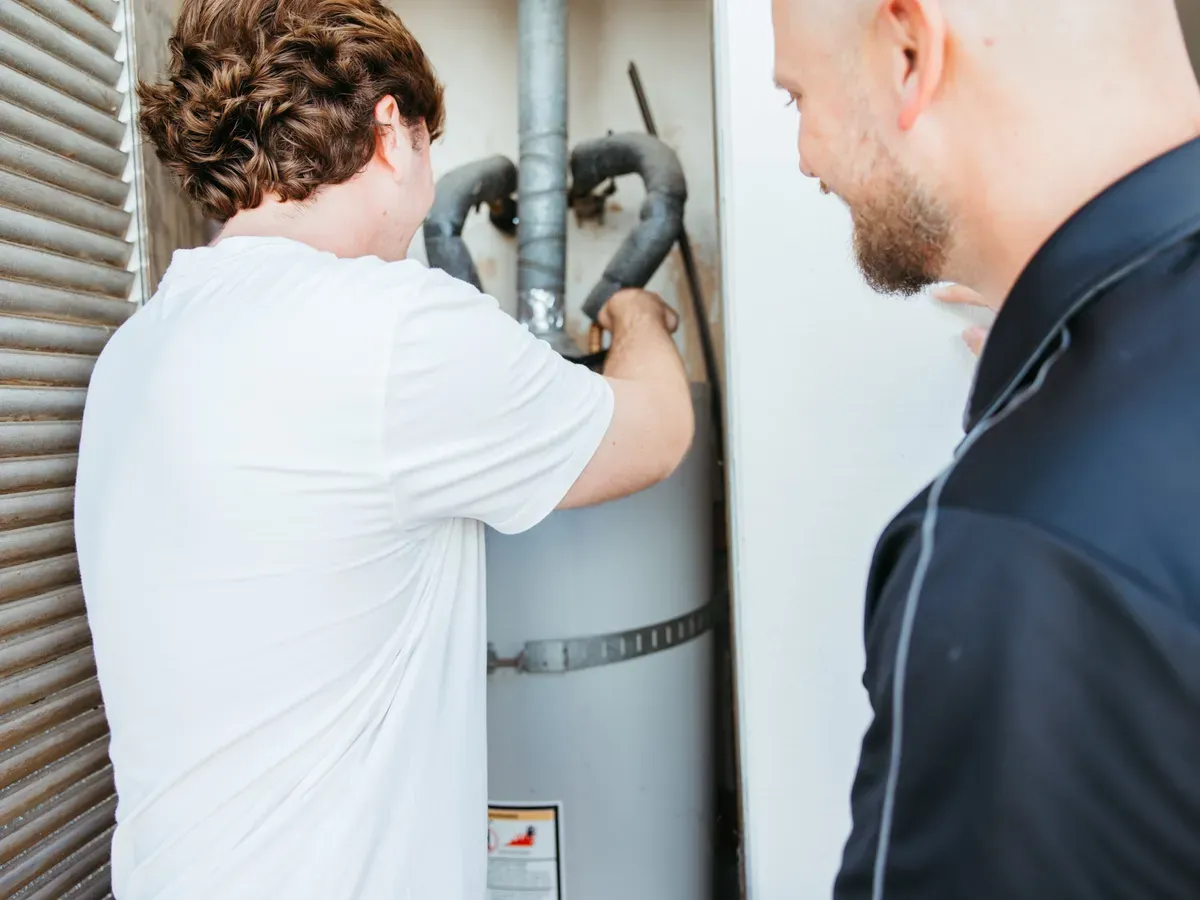
- Count the straps. You should see at least two, one high and one low.
- Check where they sit. The top strap belongs in the upper third of the tank, and the bottom strap in the lower third.
- Measure above the controls. The lower strap should be at least four inches above the gas valve or thermostat cover.
- Look at what they’re fastened to. Screws should go into wall framing or solid backing, not hang loose in drywall.
- Push gently on the tank. It shouldn’t rock or shift.
Most homes in Fountain Valley and Cypress date from the 1960s and 1970s, before the strapping law. Their water heaters have usually been replaced since, but straps added once and never checked can work loose. If the tank rocks, or the lower strap sits right on top of the controls, it’s worth fixing.
While you’re there, look for the signs that a heater is near the end of its life. We cover those in why water heaters rumble, pop or run out of hot water.
Questions people ask
Do I have to strap my water heater if I’m not selling?
Yes. Section 19211 applies to all existing residential water heaters, not only to homes being sold.
How many straps does a water heater need?
The plumbing code’s minimum is two: one in the upper third and one in the lower third. For an unusually large tank, ask your local building department what it requires.
Who is responsible for strapping a rental’s water heater?
Usually the owner. Tenants generally can’t strap a heater without the owner’s approval, and the law bars evicting a tenant in order to comply.
How Taysom Plumbing can help
Taysom Plumbing repairs and replaces water heaters across Orange County, and we’re licensed in California. If yours isn’t strapped properly, or it’s due for replacement, we’ll explain what we found. You get the options with a price for each, and nothing starts until you agree. We respect your home and clean up after ourselves. We answer the phone 24/7. Request a visit online or call (949) 919-7103.
Sources (4)
- leginfo.legislature.ca.gov/faces/codes_displaySection.xhtml?lawCode=HSC§ionNum=19211
- leginfo.legislature.ca.gov/faces/codes_displayText.xhtml?lawCode=HSC&division=13.&title=&part=3.&chapter=2.&article=8.
- lus.sbcounty.gov/wp-content/uploads/sites/48/BandS/Handouts/WaterHeaterGuide.pdf
- cityofirvine.gov/node/4831
Want us to take a look?
We answer the phone 24/7. Tell us what’s going on and we’ll give you a price before we start.