When every tap in the house runs weak, the cause is usually on the line that feeds the whole house, not in one fixture. The usual suspects are a failing pressure regulator, a main valve that isn’t fully open, or old galvanized pipe narrowed by rust. It can also be a leak between the meter and the house, or a problem on your water supplier’s side. A few simple checks, and a pressure gauge on an outside faucet, will tell you where to look.
First, is it really the whole house?
- One faucet or showerhead is weak. Unscrew the aerator on the faucet tip, or the showerhead, and rinse the screen. San Jose Water lists plugged aerators as a cause of falling pressure. If that fixes it, you’re done.
- Only the hot water is weak. If the cold runs fine everywhere and the hot is weak at every tap, look at the water heater and the valve on its supply line before anything else.
- Both hot and cold are weak everywhere. That’s a whole-house problem. Keep reading.
It also helps to notice whether it came on suddenly or slowly. San Jose Water sorts the causes that way. A sudden drop points to a leak, a closed valve, a water softener fault or a failed regulator. A slow decline over months or years points to aging pipe or a regulator that’s starting to fail.
Measure it with a gauge on a hose bib
A water pressure gauge screws onto an outdoor faucet like a hose. San Jose Water says to measure static pressure this way, while no water is being used anywhere on the property.
What should it read? San Jose Water says a pressure regulator can bring pressure down to a desirable range of 50 to 60 psi for inside use. At the other end, the California Plumbing Code calls for a pressure regulator when pressure is above 80 psi, as the City of Newport Beach’s repipe checklist notes.
The pressure regulator and the main valve
Many homes have a pressure regulator, often called a PRV, on the main line into the house. It takes the higher pressure from the street and brings it down to a level that’s safe for faucets, toilet valves and the water heater. San Jose Water notes that it’s installed and maintained by the homeowner, not the water supplier.
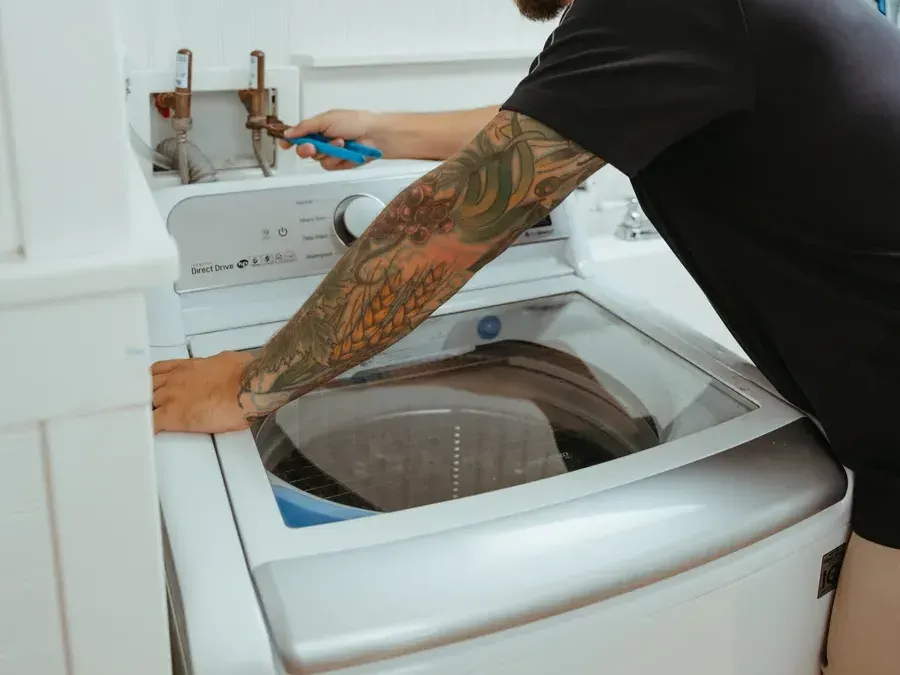
Regulators wear out. One that fails can drop the pressure to the whole house, or make it come and go. One that fails the other way lets high pressure through, which shows up as banging pipes, dripping taps or a toilet that keeps running.
The main shutoff is the other easy check. If anyone has worked on the plumbing lately, the main valve may not have been opened all the way again. San Jose Water lists closed house valves among the causes of a sudden drop. A gate valve, the round handle, takes several turns to open fully. SCV Water warns that old valves can stick or break, so don’t force one that won’t move.
If you have a water softener, put it in bypass and test again. San Jose Water lists a malfunctioning softener as another cause, and most softeners have a bypass valve.
Old galvanized pipe
If the pressure has been falling slowly for years, and your house was built before the mid-1960s, look at the pipe itself. Galvanized steel supply lines were common in homes of that era. They rust from the inside, and the opening narrows until less water gets through.
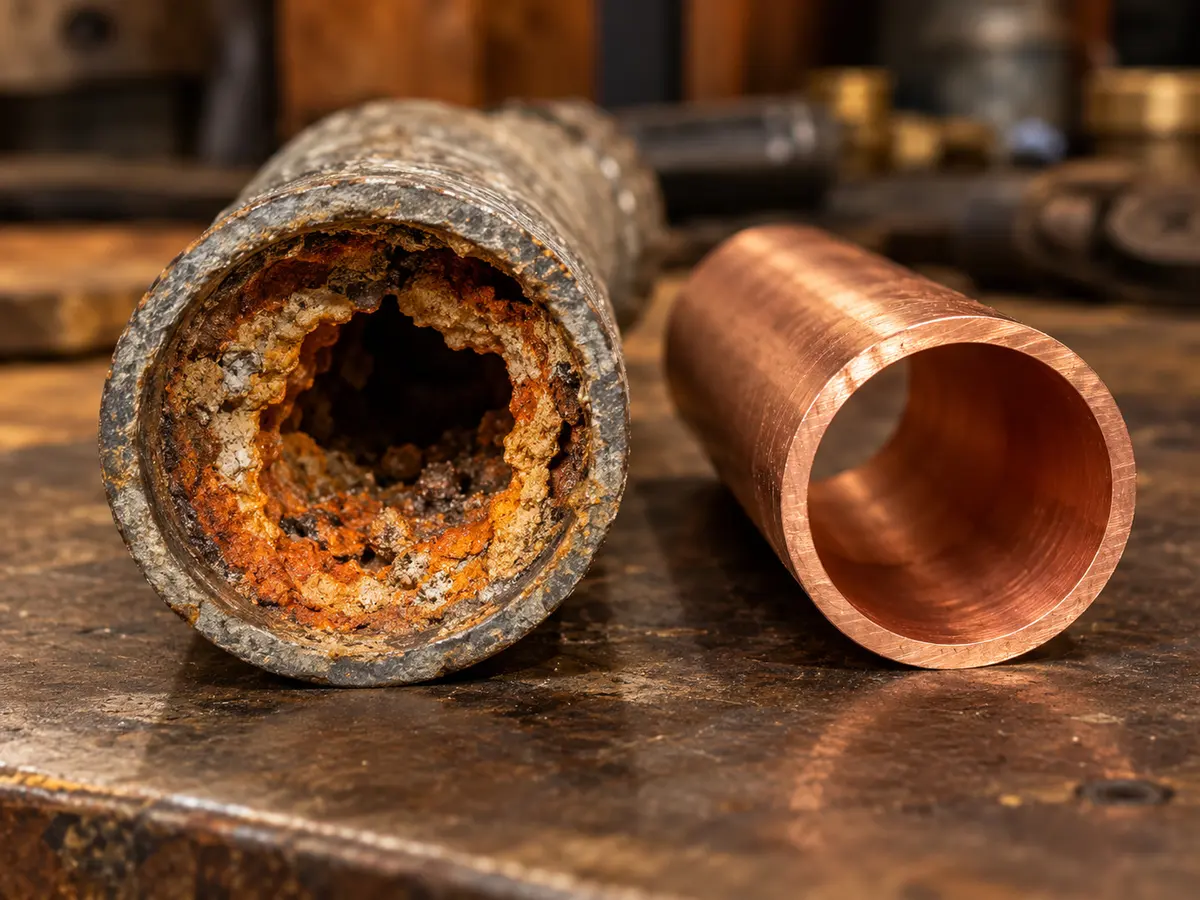
That’s a real possibility in much of north and central Orange County. In Garden Grove, more homes were built in the 1950s than in any other decade, close to four in ten by census estimates. Much of West Anaheim went up as ranch-style tracts in the 1950s and 1960s. In Newport Beach, Irvine Terrace still has original mid-1950s homes.
To check, find a pipe where it comes out of the wall under a sink or at the water heater. Galvanized steel is dull gray, has threaded joints, and a magnet sticks to it. Copper and plastic won’t hold a magnet. Rusty-looking water, especially first thing in the morning, is another sign.
If galvanized pipe turns out to be the cause, that’s when a partial or whole-house repipe is worth talking about.
A hidden leak
Water escaping from the line before it reaches your taps can lower the pressure everywhere. San Jose Water names leaks in the service line between the meter and the house as one cause of a sudden drop.
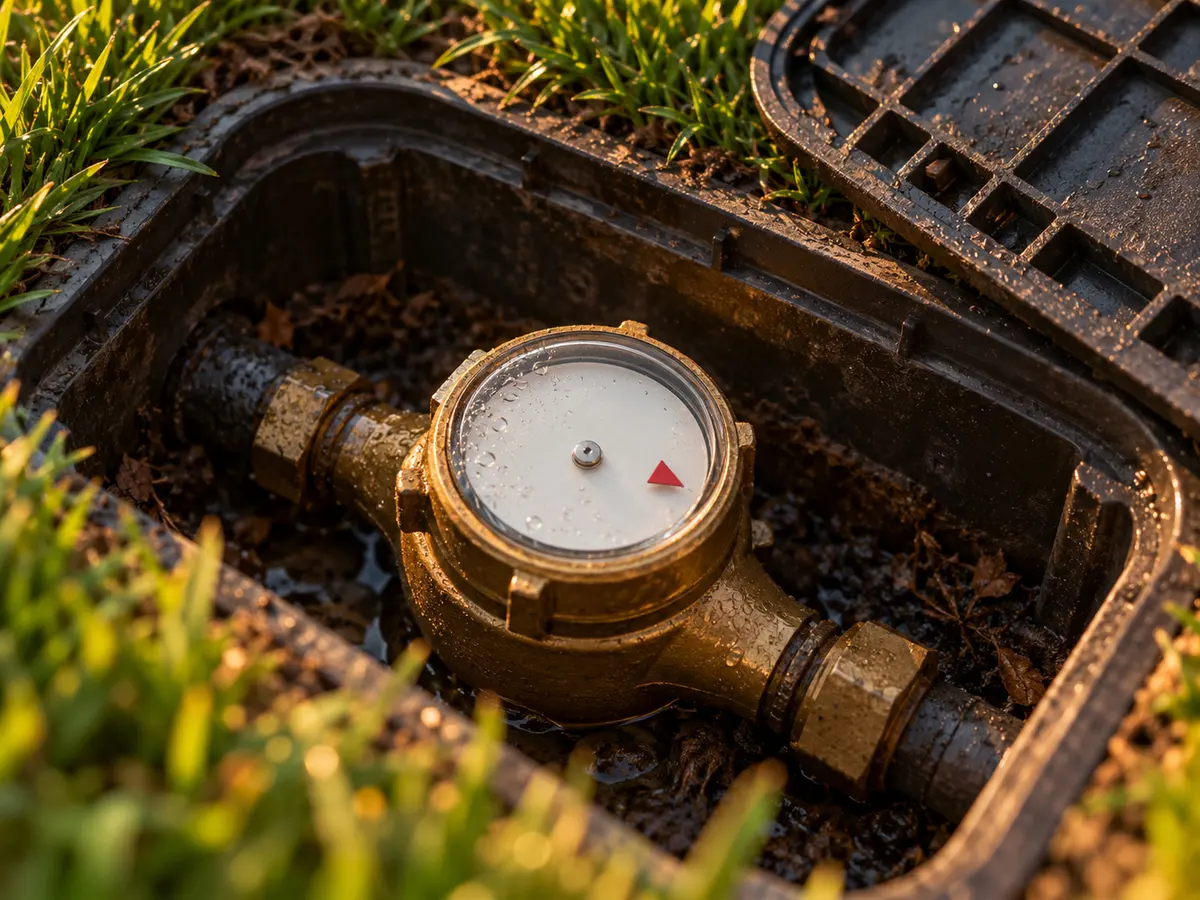
Other signs go with it: a soggy patch in the yard that never dries, a strip of greener grass, or a water bill that’s climbed. The meter test is the quickest check. Turn off every tap, toilet, sprinkler and appliance, then watch the leak indicator on the meter for fifteen minutes. If it moves, water is going somewhere. Leak detection finds where before anything gets dug up.
Your street, your supplier, and the hills
Sometimes the problem isn’t yours at all. Ask a neighbor or two whether their pressure has dropped. If the whole street is low, call your water supplier. In these three cities, that’s City of Anaheim Public Utilities, City of Newport Beach Utilities or City of Garden Grove Water Services. San Jose Water points out that leaking water mains are the utility’s to repair.
Elevation matters too. San Jose Water explains that a home higher up than the tank feeding it gets lower pressure. A home further downhill gets more, roughly half a psi for every foot. In Anaheim Hills, pressure can differ a lot from one street to the next. On Newport Coast’s hillside streets, pressure regulators do a lot of work, and the ones put in with the first homes are now well into their service life.
Questions people ask
Can a bad pressure regulator cause low pressure?
Yes. San Jose Water lists a malfunctioning regulator as a cause of both sudden drops and on-and-off pressure problems. A gauge reading at the hose bib is the first step to finding out.
Does low pressure mean I need a repipe?
Not automatically. Check the aerators, the main valve, the regulator and the softener bypass first, and rule out a leak. If the house has galvanized pipe and the pressure has been falling for years, then a repipe is worth discussing.
Taysom Plumbing tests the pressure and checks the regulator, the valves and the pipe before suggesting a fix. We explain what we found, and if a repipe is the answer, we’ll tell you whether a partial one will do. You get your options with a price for each, and nothing starts until you’ve agreed to it. We’re licensed in California, and we respect your home and clean up after ourselves. Request a visit online or call (949) 919-7103.
Sources (3)
Want us to take a look?
We answer the phone 24/7. Tell us what’s going on and we’ll give you a price before we start.