
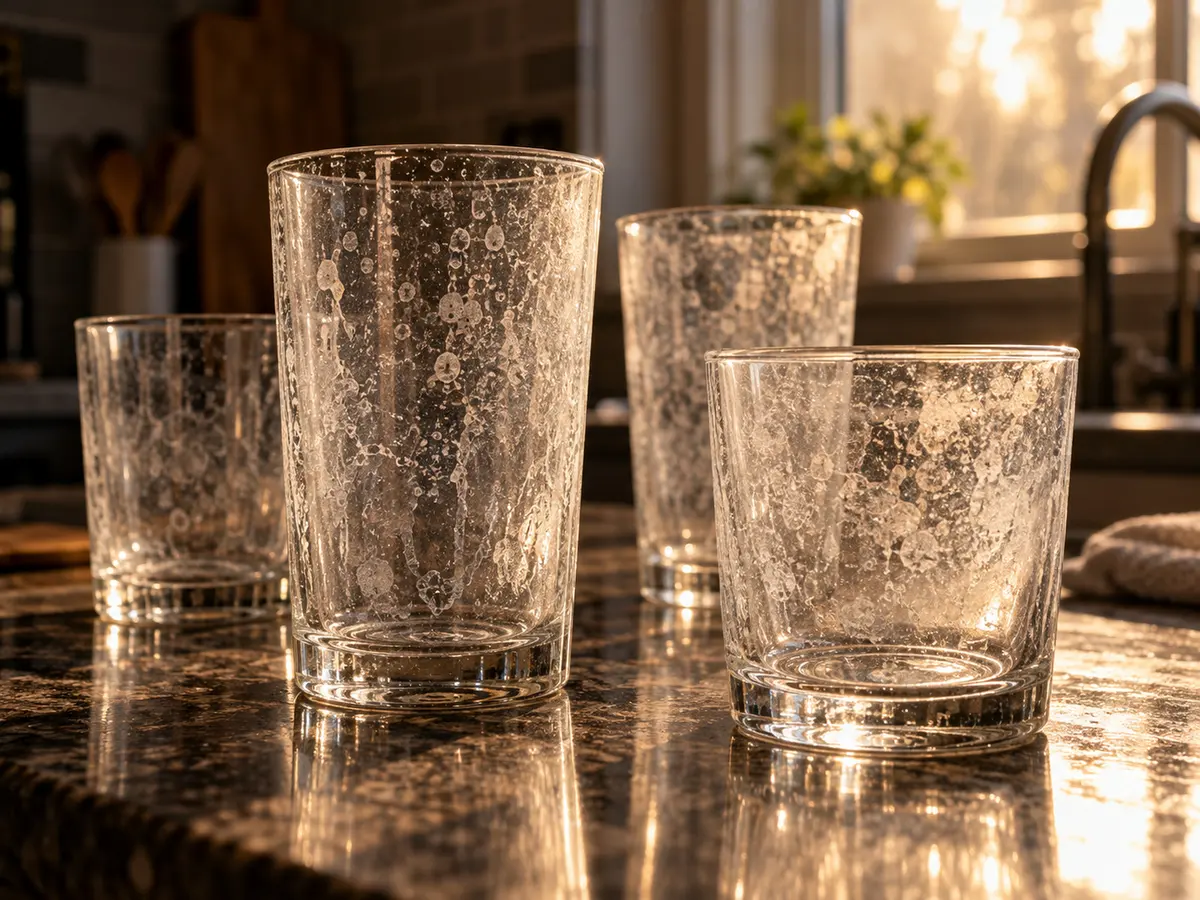
A water softener and a water filter solve different problems. A softener removes the calcium and magnesium that make water hard, which cause scale, spots and soap that won’t lather. A whole-home filter removes what you taste and smell, like chlorine, along with sediment, but it leaves hardness alone. If your trouble is crust and spots, look at a softener. If it’s taste and smell, look at a filter. Plenty of Orange County homes have both.
What a water softener does
A conventional softener is a tank of resin beads. As hard water passes through, the beads trade the calcium and magnesium for sodium or potassium. NSF covers softeners under its NSF/ANSI 44 standard.
Once the beads are full of calcium and magnesium, the softener cleans itself. It rinses the beads with salt water from a brine tank, then sends that rinse water down the drain. That’s why softeners need salt, either sodium chloride or potassium chloride.
What you notice afterward:
- Less white crust on taps, showerheads and shower glass
- Fewer spots on dishes
- Soap and shampoo that lather more easily
- Less scale building up inside the water heater
What a softener doesn’t do is change the taste of chlorine or remove most contaminants. That’s a filter’s job.
What a water filter does
A whole-home filter, often a carbon filter, catches things as water passes through it. NSF certifies filters for taste and smell problems like chlorine under NSF/ANSI 42. Filters that reduce a contaminant with a health effect are certified under NSF/ANSI 53.
Chloramine is worth knowing about here. The EPA describes chloramines as disinfectants made by adding ammonia to chlorine. They last longer in the pipes than chlorine alone, and more than one in five Americans drinks water treated with them. Some Orange County water is among them. Mesa Water District’s 2026 report says its supply, like that of the Metropolitan Water District of Southern California, is treated with chloramines.
NSF’s own advice applies to every filter: certification doesn’t mean a filter removes everything. Check that it’s certified for the specific thing you want out. If your water is treated with chloramine, look for chloramine on the list, not just chlorine.
Salt-free conditioners: what they do and don’t claim
You’ll also see salt-free systems sold as softener alternatives. They’re usually called conditioners, and the difference matters.
A softener removes the hardness minerals. A conditioner leaves the minerals in the water and changes their form, so they’re less likely to stick as scale. If you test the water afterward, the hardness is still there.
There’s some evidence they can work for scale. In testing at the University of Arizona, one type, called template assisted crystallization, cut scale formation the most of the methods tried. Ion exchange, the softener method, came a close second. But the US has no standard for measuring how much scale treated water forms. And because the minerals are still in the water, spots can still form where water dries, like on glass and fixtures. Magnetic devices are another matter: claims for magnetic water treatment aren’t considered valid.
So a conditioner may be a fit if your main concern is scale in pipes and the water heater, and you don’t want salt or a brine discharge. It’s not the answer for spotty glasses.
Start with your water report
Every community water system has to send customers an annual water quality report, also called a Consumer Confidence Report. The EPA says these must go out each year by July 1. If you didn’t get yours, call your water supplier or use the EPA’s report search.
The report lists where your water comes from and what was detected in it. Look for “hardness” in the tables. It’s usually given in milligrams per liter or parts per million, which are the same thing for water. Some reports add grains per gallon. To convert, divide milligrams per liter by 17.1.
Here’s how different the answer can be within one county, using each supplier’s 2025 average:
- Yorba Linda: 20.1 grains per gallon, very hard
- Orange: 17.5 grains per gallon, very hard
- Huntington Beach: 9.5 grains per gallon, hard
- Costa Mesa: 6.6 grains per gallon, moderately hard
Those labels are the Water Quality Association’s bands. Anything over 10.5 grains per gallon counts as very hard. Hardness also varies across a supplier’s area and through the year. We list every city we have a figure for in how hard Orange County’s water is, city by city.
A household in Yorba Linda with crusty fixtures and a rumbling water heater is a strong softener case. A household in Huntington Beach that mostly dislikes the taste of its tap water may only need a filter. You can also look up your city on our water filtration page.
A note on softener rules in California
California law lets some local agencies limit softeners that flush brine into the sewer. Under Water Code section 13148, in effect since 2010, an agency that runs a sewer system or water recycling plant may restrict these “self-regenerating” softeners. This applies in certain regions, including the South Coast region, which takes in all of Orange County.
An agency can only act after its regional water board finds that cutting household salt will help meet water quality goals. If it does, it can require high-efficiency models, require permits, or even ban new installations. The law doesn’t limit portable exchange softeners, where a service swaps out the tanks. Before installing a softener, it’s worth asking your sewer agency whether any rule applies.
Questions people ask
Can I have a softener and a filter?
Yes. Combination systems filter the water first, then soften it. They suit homes with hard water that also tastes of chlorine.
Is softened water safe to drink?
The EPA considers sodium in drinking water unlikely to cause health problems, because it’s a small share of daily sodium. If you’re on a sodium-restricted diet, ask your doctor, and ask about potassium chloride or a separate drinking-water tap.
Will a filter stop spots on my glasses?
No. Spots come from hardness minerals, and a standard filter leaves them in. That’s a softener’s job.
How Taysom Plumbing can help
Taysom Plumbing installs whole-home softeners and filters across Orange County, and we’re licensed in California. We look at how hard your water is and what’s in it, then size the system to your water and your household. You get the options with a price for each, and nothing starts until you agree. We respect your home and clean up after ourselves. We answer the phone 24/7. Request a visit online or call (949) 919-7103.
Sources (8)
- nsf.org/consumer-resources/articles/standards-water-treatment-systems
- en.wikipedia.org/wiki/Water_softening
- epa.gov/dwreginfo/chloramines-drinking-water
- epa.gov/ccr/ccr-information-consumers
- mesawater.org/sites/default/files/2026-06/final2026consumerconfidencereport.pdf
- ylwd.com/wp-content/uploads/2026/06/2026-WQR-YLWD.pdf
- leginfo.legislature.ca.gov/faces/codes_displaySection.xhtml?lawCode=WAT§ionNum=13148
- en.wikipedia.org/wiki/South_Coast_hydrologic_region
Want us to take a look?
We answer the phone 24/7. Tell us what’s going on and we’ll give you a price before we start.