To check for a leak with your water meter, turn off every tap, appliance and sprinkler, then look at the meter’s low-flow indicator. If it turns while nothing is running, water is leaving your plumbing somewhere. For a slow leak, write down the reading, use no water for two hours, and read it again. Any change means you probably have a leak.
It’s worth the time. The EPA’s WaterSense program says the average household’s leaks can account for “more than 9,300 gallons of water wasted every year,” and that nine percent of homes have leaks wasting 50 gallons or more a day.
Find your meter and learn its face
In most Orange County homes, the meter sits in a concrete box in the ground near the street or the sidewalk. Lift the lid with a screwdriver rather than your fingers, and watch for spiders.
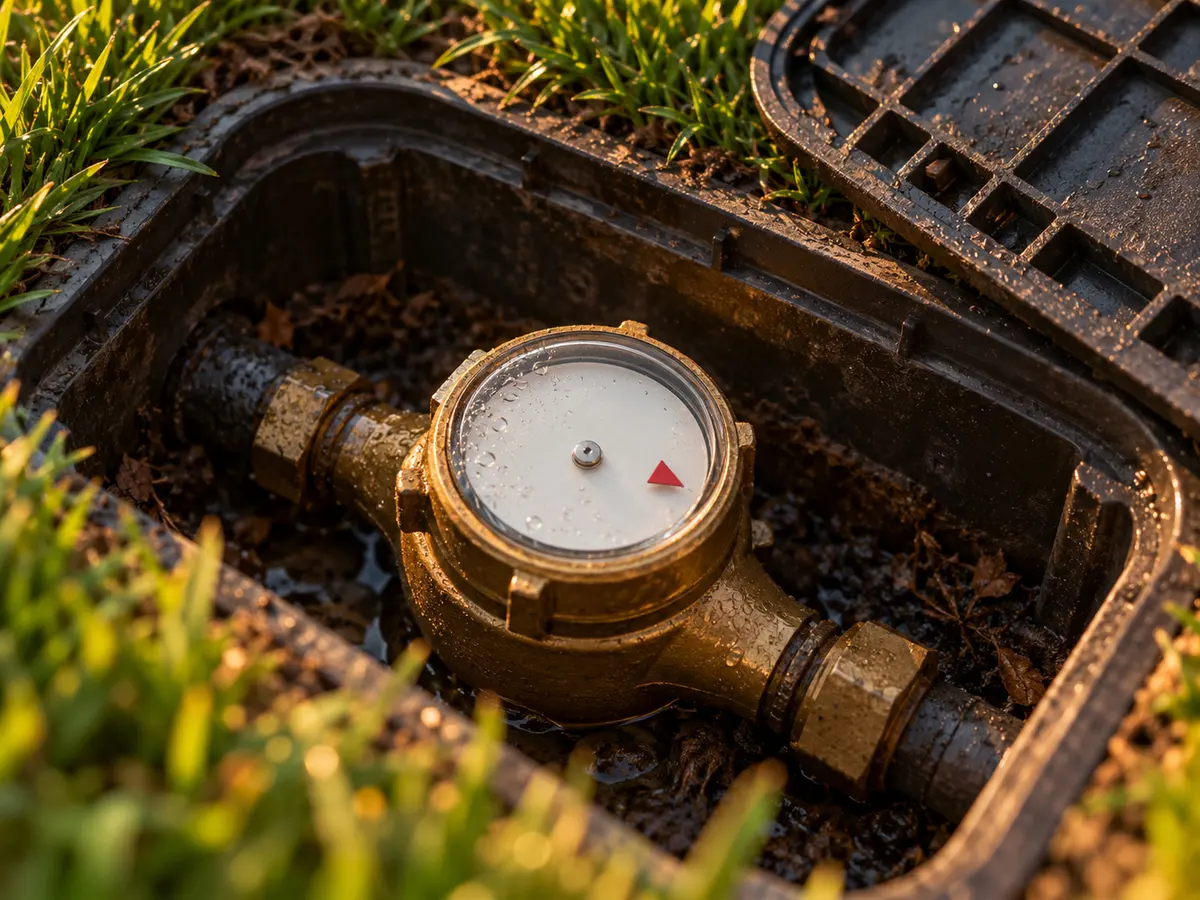
Most dial meters have three things on the face:
- The number display. This is your usage, usually in cubic feet. Many water bills charge by the unit of 100 cubic feet, and one cubic foot is about 7.48 gallons.
- The sweep hand. The big hand that circles the dial as water flows.
- The low-flow indicator. A small triangle, star or wheel that spins with even a trickle. The City of San Diego’s meter guide calls it the indicator “used for leak detection.”
Newer digital meters show flow on a screen instead. If you’re not sure which symbol means water is moving, your water supplier can tell you.
The meter test, step by step
- Turn everything off. Every faucet, shower and toilet. The irrigation controller. The washing machine, dishwasher and ice maker. If you have a water softener, a reverse osmosis system or a pool auto-fill, put them in bypass or make sure they aren’t cycling.
- Read the meter. Write down every digit on the display and note where the sweep hand is pointing. A phone photo works well.
- Watch the low-flow indicator for 15 minutes. If it moves at all, water is going somewhere.
- For a slow leak, wait two hours. The EPA suggests reading the meter before and after a two-hour period when no water is used. Bedtime or a workday is a good time to do it.
- Read it again. If the numbers or the sweep hand have moved, you probably have a leak.
Narrow it down: inside, outside or toilet
If the meter moved, the next step tells you roughly where.
Close the main shutoff valve at the house and watch the indicator again. If it keeps moving with the house shut off, the leak is between the meter and your house. That’s usually the buried service line, or an irrigation line that branches off before the house valve. A patch of yard that stays soggy when it hasn’t rained often points the same way.
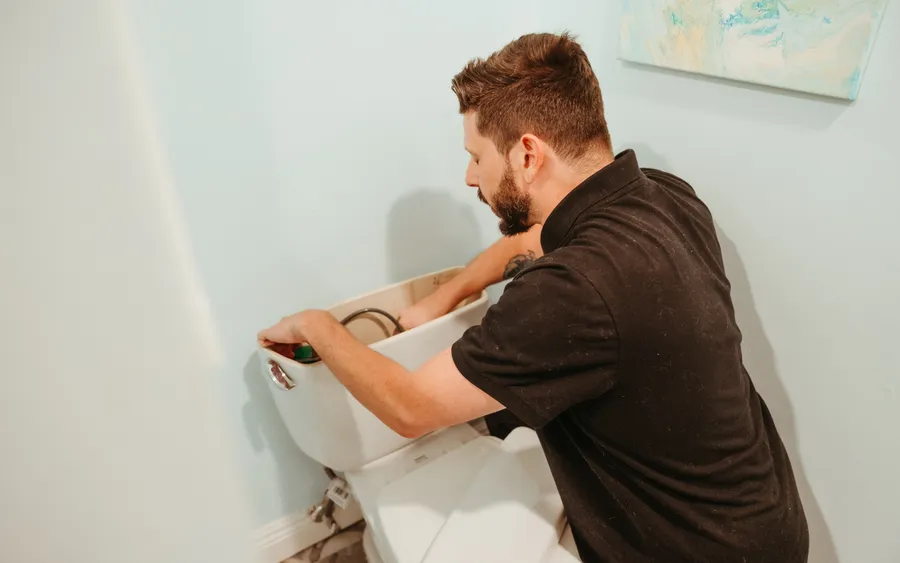
If the indicator stops when the house valve is closed, the water is going somewhere inside. Start with the toilets, because they’re the most common silent leak.
Do the toilet dye test. The EPA’s method is simple:
- Put a few drops of food coloring in the toilet tank, not the bowl.
- Wait 10 minutes without flushing.
- If any color shows up in the bowl, the toilet is leaking.
- Flush afterward so the dye doesn’t stain the tank.
The usual culprit is a worn flapper, the rubber seal at the bottom of the tank. The EPA suggests checking it periodically and replacing it at least every five years. Irvine Ranch Water District, which serves Irvine, notes that a silent toilet leak can waste more than 40 gallons of water a day, so this one is worth doing even if your meter test passed.
What your result means
The indicator didn’t move. Good news: nothing is leaking continuously right now. A leak that only runs when something is on, such as a valve that drips while a toilet refills, can still hide. If your bill still looks high, repeat the test another day.
It moved, and stopped with the house valve closed, and the toilets passed. The leak is inside the house, in a wall, a ceiling or under the floor. Check under sinks, behind toilets and around the water heater for anything damp. If nothing shows, the water may be leaving through a pipe you can’t see.
It moved even with the house valve closed. The leak is on the line from the meter to the house, or on irrigation. On big properties that can mean a lot of buried pipe. In Coto de Caza, Los Ranchos Estates alone is 75 custom homes on 355 acres, so finding the spot before anyone digs matters.
A high bill is a clue too. The EPA says that if a family of four uses more than 12,000 gallons a month in a colder month, such as January or February, there could be serious leaks.
When to call a plumber
The meter tells you water is leaving. It doesn’t tell you where. Call when:
- The meter moves with everything off and you can’t find a drip.
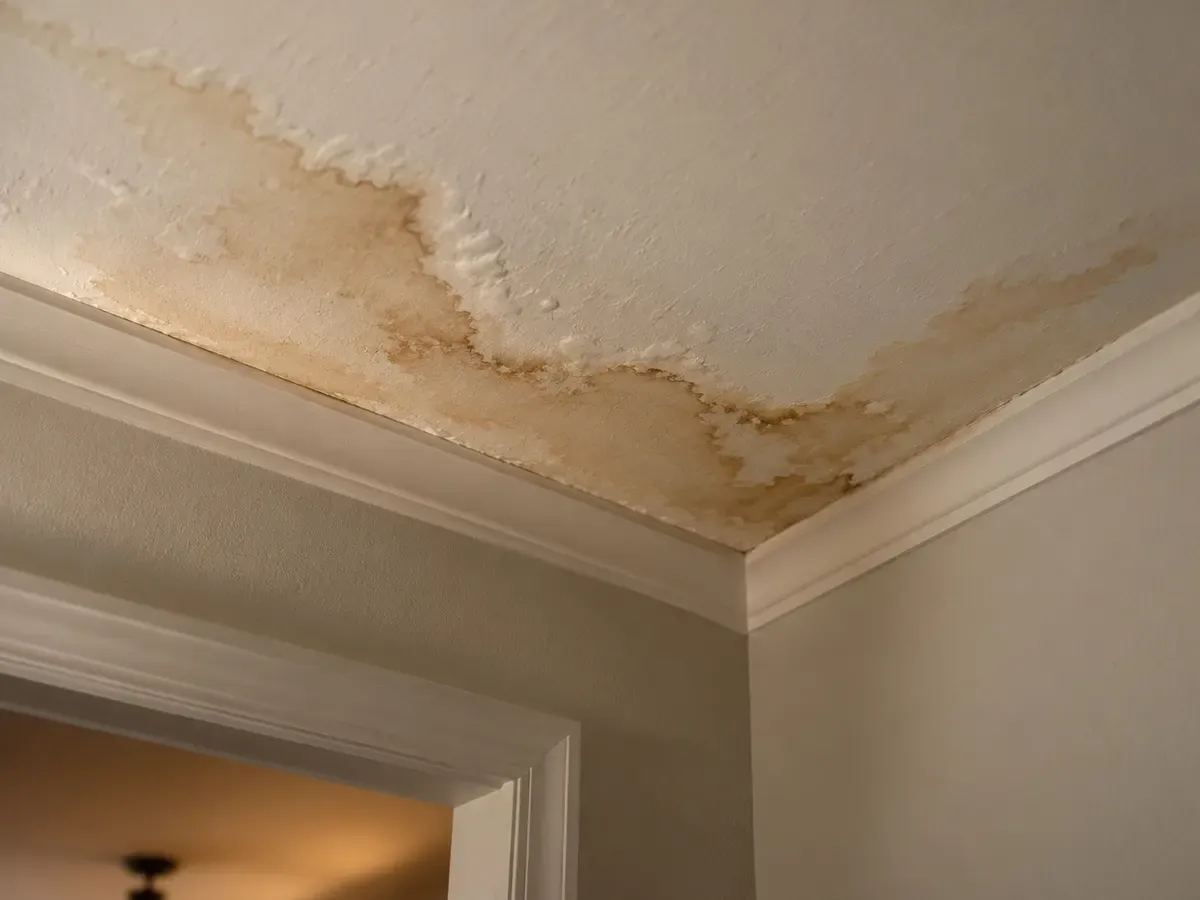
- You see a warm spot on the floor, hear water running with the taps off, or find stains or bubbling paint on a wall or ceiling.
- The indicator is spinning fast. Close the main shutoff valve until someone can look.
Age matters too. Huntington Beach grew from about 11,500 people in 1960 to more than 170,000 by 1980. Many of its homes still run on supply lines 45 years old or more. Where a line like that runs under a concrete slab, a pinhole leak can run a long time before anything shows.
Questions people ask
How long should I watch the meter?
Fifteen minutes on the low-flow indicator catches most continuous leaks. For a very slow leak, use the EPA’s two-hour test: read, use no water, read again.
Can a water softener make the meter move?
Yes, while it’s regenerating. Put it in bypass or test outside its cycle so it doesn’t give a false result.
Will the meter test find a slab leak?
It will show that water is escaping, but not where. Pinpointing a leak under the slab takes listening and pressure-testing equipment, so the floor gets opened in one spot, not searched.
How Taysom Plumbing can help
If your meter moves and you can’t find why, Taysom Plumbing offers water leak detection across Orange County. We find where the water is going before anything gets opened up, show you what we found, and give you the options with a price for each. Nothing starts until you agree. We respect your home and clean up after ourselves. We’re licensed in California and we answer the phone 24/7. Request a visit online or call (949) 919-7103.
Sources (5)
Want us to take a look?
We answer the phone 24/7. Tell us what’s going on and we’ll give you a price before we start.